
Leave your Message

-
Yongqi Chen sales consultant
-
Phone/WhatsApp: +86 13187012919
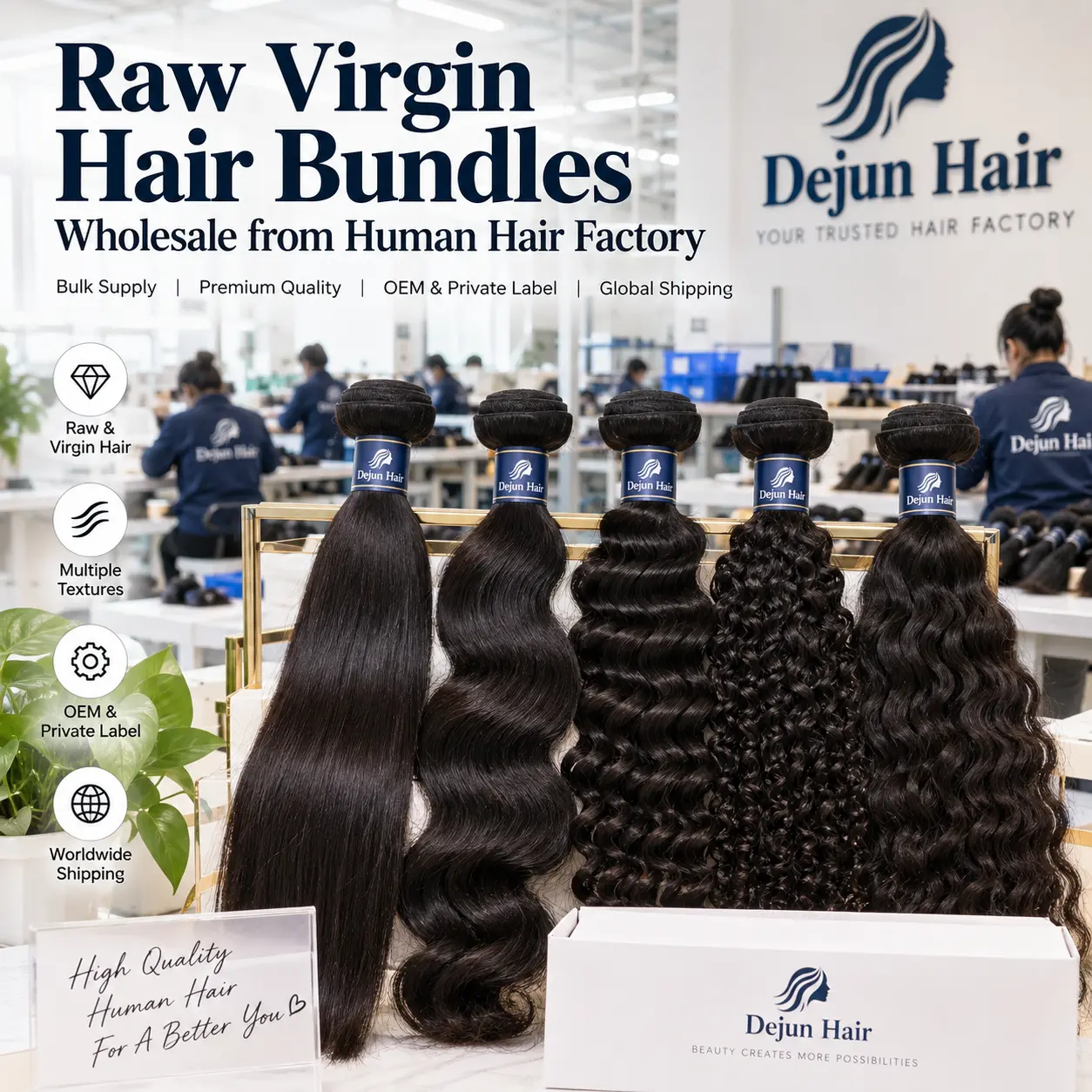
Raw Virgin Hair Wholesale: How to Find Reliable Raw Hair Vendors for Your Business
Finding raw hair vendors is easy. Finding a vendor that can consistently supply the same hair quality, communicate clearly, support wholesale orders, and deliver reliable products month after month is much harder.
For salon owners, hair wholesalers, online hair brands, and new entrepreneurs, choosing the wrong supplier can create problems far beyond one disappointing shipment. Inconsistent bundles can lead to customer complaints, returns, poor reviews, slow-moving inventory, and damage to your brand reputation.
That is why successful raw virgin hair sourcing should not begin with one question: “Who has the lowest price?”
It should begin with a better question: How can I verify that a raw hair supplier can meet my quality, price, MOQ, customization, and long-term supply requirements?
This guide explains how to find reliable raw hair vendors, evaluate raw virgin hair quality, test samples, compare wholesale terms, identify supplier red flags, and reduce your risk before placing a bulk order.
What Is Raw Virgin Hair?
Before comparing raw virgin hair wholesale suppliers, buyers need to understand what they are actually purchasing.
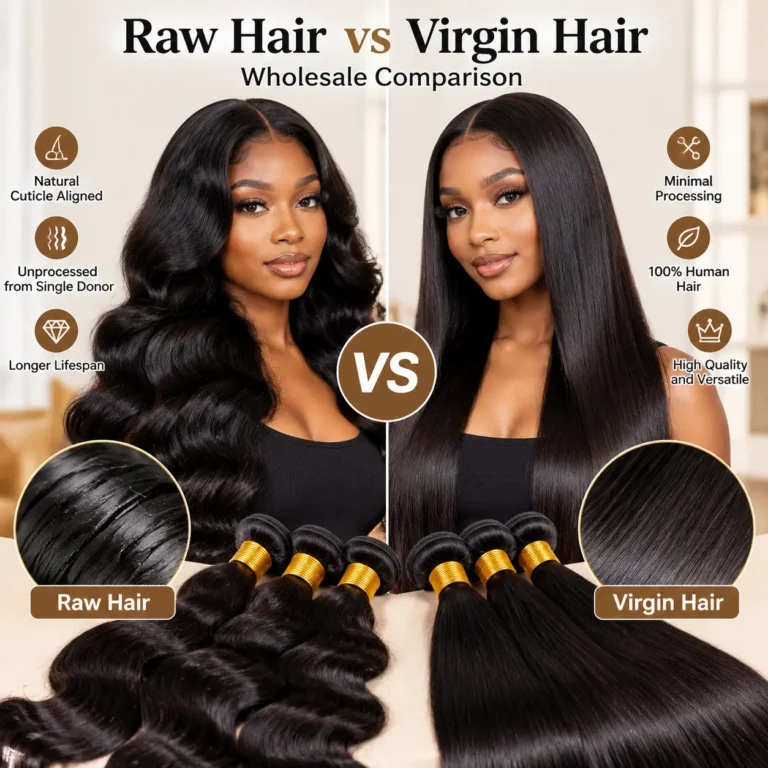
In the hair industry, terms such as raw hair, virgin hair, Remy hair, and even grade labels such as 10A or 12A are often used differently by different suppliers. There is no single universal grading system that guarantees identical quality across vendors.
Raw virgin hair is generally marketed as human hair that has undergone minimal chemical processing and retains a natural appearance and cuticle structure. Depending on the supplier and product specification, raw hair may be sold in natural straight, wavy, curly, or other textures.
For wholesale buyers, however, the product name alone is not enough.
Instead of asking only whether the product is “100% raw hair,” ask for specific information about:
- Hair sourcing and processing
- Cuticle condition and alignment
- Bundle weight
- Available lengths
- Texture consistency
- Color treatment
- Weft construction
- Shedding and tangling performance
- Washing and heat-styling performance
- Batch-to-batch consistency
A professional buyer should evaluate the actual product specification and sample performance rather than depending entirely on labels such as “raw,” “virgin,” or a particular hair grade.
This is especially important when comparing raw virgin hair bundles wholesale, because small quality differences become much more expensive when an order increases from a few samples to hundreds or thousands of bundles.
Why Choosing the Right Raw Hair Vendor Matters
The right raw hair vendors for a hair business are not simply companies that can send you attractive bundles.
A reliable supplier should help you maintain a repeatable product standard.
Imagine that you test a sample of body wave bundles and receive excellent customer feedback. You then place a larger wholesale order, but the second batch feels different, sheds more, or has inconsistent bundle weights.
Even if the price was competitive, the purchasing decision becomes expensive.
For a hair business, supplier consistency affects several areas at once: customer satisfaction, repeat purchases, product reviews, inventory planning, return rates, and ultimately your profit margin.
This is why established wholesalers and salons usually evaluate suppliers based on total purchasing value, not unit price alone.
8 Things to Check When Choosing Reliable Raw Hair Vendors
If you are researching how to find raw hair vendors, use a structured evaluation process instead of selecting suppliers based only on photos, social media followers, or quotations.
1. Verify Whether You Are Working With a Manufacturer or Reseller
One of the first questions to ask is where the supplier sits in the supply chain.
A manufacturer or factory-based supplier may have more direct control over hair selection, weft production, quality inspection, packaging, customization, and bulk production.
A trading company or reseller can also be a legitimate supplier, but buyers should understand who is actually responsible for production and quality control.
Ask potential vendors about their production process. Can they explain how incoming hair is inspected? Where are bundles processed and wefted? How is finished hair checked before shipment?
A serious supplier should be able to explain these processes clearly.
For buyers that also sell finished wigs, working with a supplier that combines human hair processing with wig manufacturing can simplify sourcing. The same partner may be able to supply hair bundles alongside Lace Front Wigs Wholesale, Full Lace Wigs Wholesale, and Bob Wigs Wholesale programs, making it easier to consolidate multiple product categories with one manufacturing partner.
2. Ask Specific Questions About Hair Quality
Avoid questions that can be answered with a simple “yes.”
Instead of asking:
“Is this good raw hair?”
Ask:
“What processing has this hair received?”
“What is the standard bundle weight?”
“How do you control shedding?”
“Can the hair be washed and restyled?”
“How consistent are the texture and color between batches?”
“What happens if a bulk shipment does not match the approved sample?”
Specific questions make it easier to compare reliable raw hair vendors on measurable purchasing criteria.
3. Check Bundle Consistency
One excellent bundle does not prove that a supplier can handle wholesale production.
For raw hair bundles wholesale, consistency matters almost as much as the quality of the first sample.
Compare several bundles of the same specification. Look at their weight, length, texture, fullness, color variation, weft construction, and overall feel.
Then ask an even more important question: can the supplier reproduce this standard on your next order?
For B2B buyers, repeatability is what turns a good sample into a commercially useful product.
4. Compare MOQ and Mixed-Order Flexibility
MOQ can be particularly important for small businesses.
A large wholesaler may prefer to order hundreds of bundles at once, while a new salon or online seller may need to test several lengths and textures before committing to deeper inventory.
When comparing raw hair vendors for small businesses, ask whether the supplier supports:
- Sample orders
- Low-MOQ trial orders
- Mixed lengths
- Mixed textures
- Multiple SKUs in one wholesale order
- Increasing volume after initial testing
Flexible purchasing allows you to learn what your customers actually want before investing heavily in inventory.
At Dejun, for example, our experience serving different types of overseas B2B buyers has shown that purchasing requirements can vary significantly between an established wholesaler and a salon testing a new product category. Order planning should reflect the buyer’s market rather than forcing every customer into the same purchasing model.
5. Evaluate OEM and Private-Label Capabilities
If you are building your own hair brand, the supplier relationship may eventually go beyond buying standard bundles.
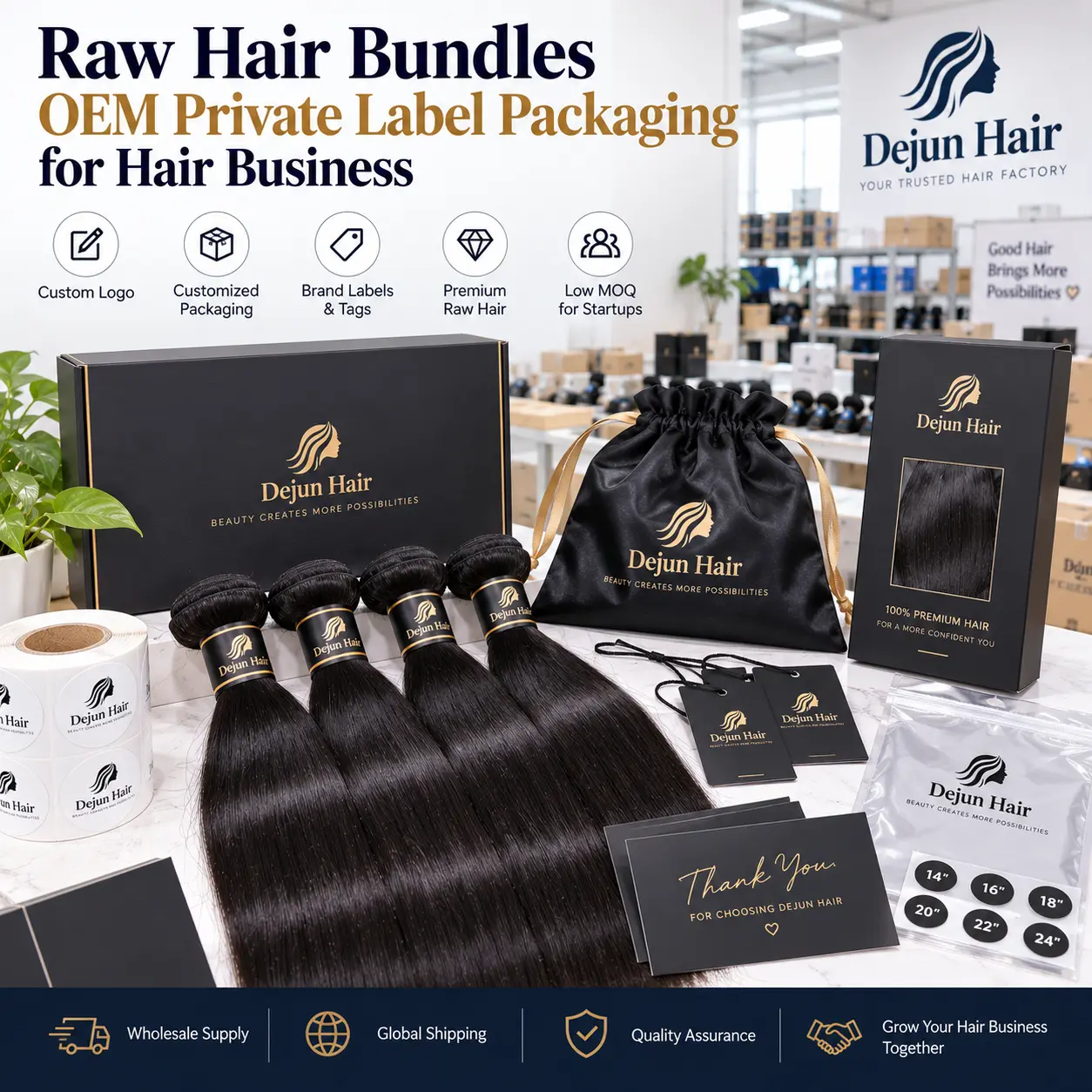
Ask whether your raw hair supplier can support custom packaging, branded tags, logo applications, bundle specifications, custom textures, finished wigs, and other OEM/ODM requirements.
This becomes more important as your business grows.
A buyer may begin with standard Wholesale Human Hair Bundles, but later want branded packaging, matching closures and frontals, or finished wigs made according to specific density, lace, length, and cap requirements.
Working with a supplier that can support this transition can reduce the need to rebuild your supply chain later.
6. Check Production Capacity and Lead Times
Fast sample delivery does not automatically mean fast bulk production.
Before placing a large order, ask the vendor about typical production lead times for your actual quantity.
You should also understand the difference between:
In-stock products — products that can usually be prepared relatively quickly.
Made-to-order products — specifications that require additional processing or production.
Customized products — OEM orders involving special textures, packaging, labels, colors, construction, or other requirements.
If you are preparing inventory for a promotion, holiday season, product launch, or retail event, build production and international shipping time into your purchasing schedule.
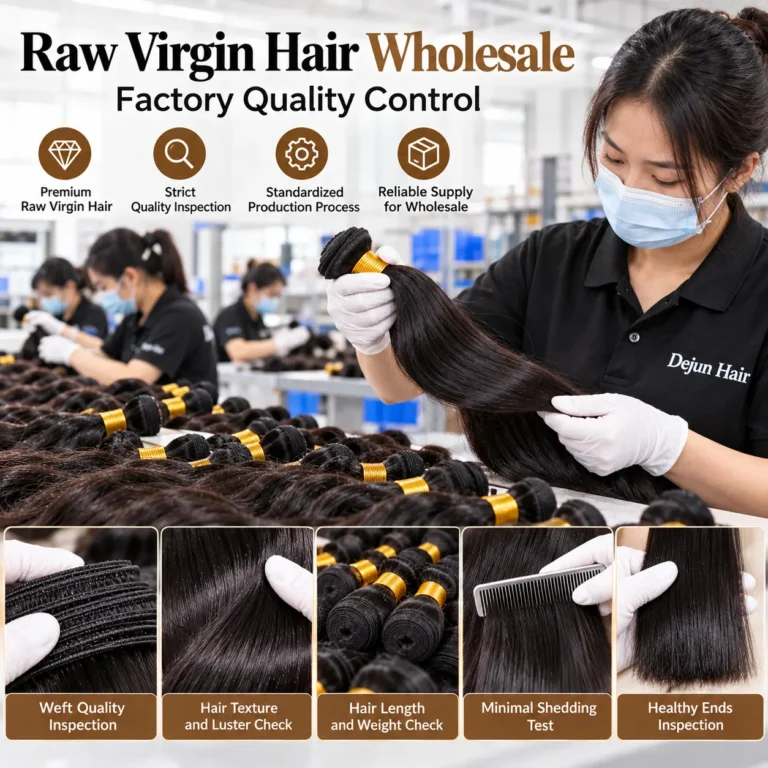
7. Review the Supplier’s Quality-Control Process
Quality control should happen before products leave the factory—not after your customers start complaining.
Ask potential wholesale raw virgin hair vendors what they inspect before shipment.
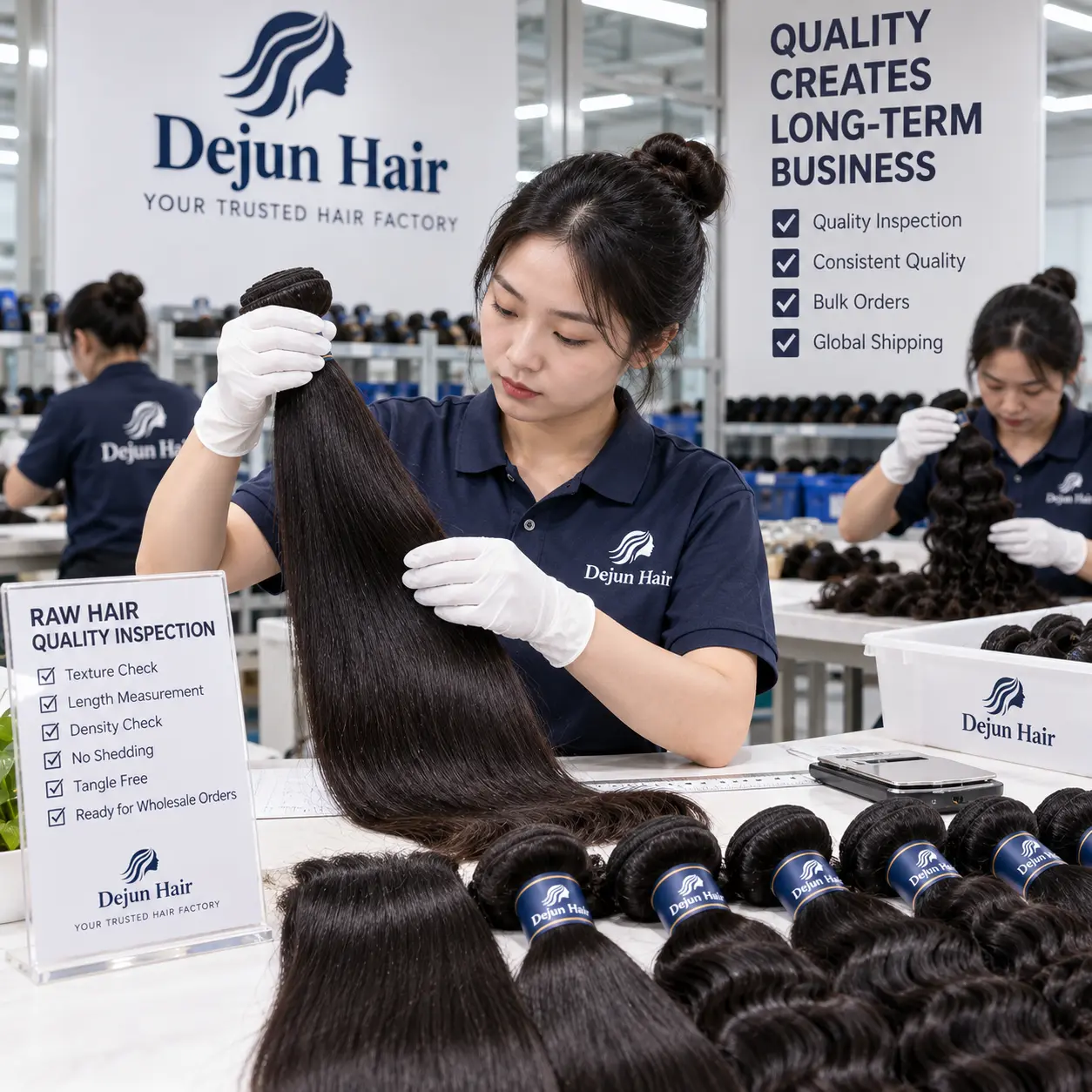
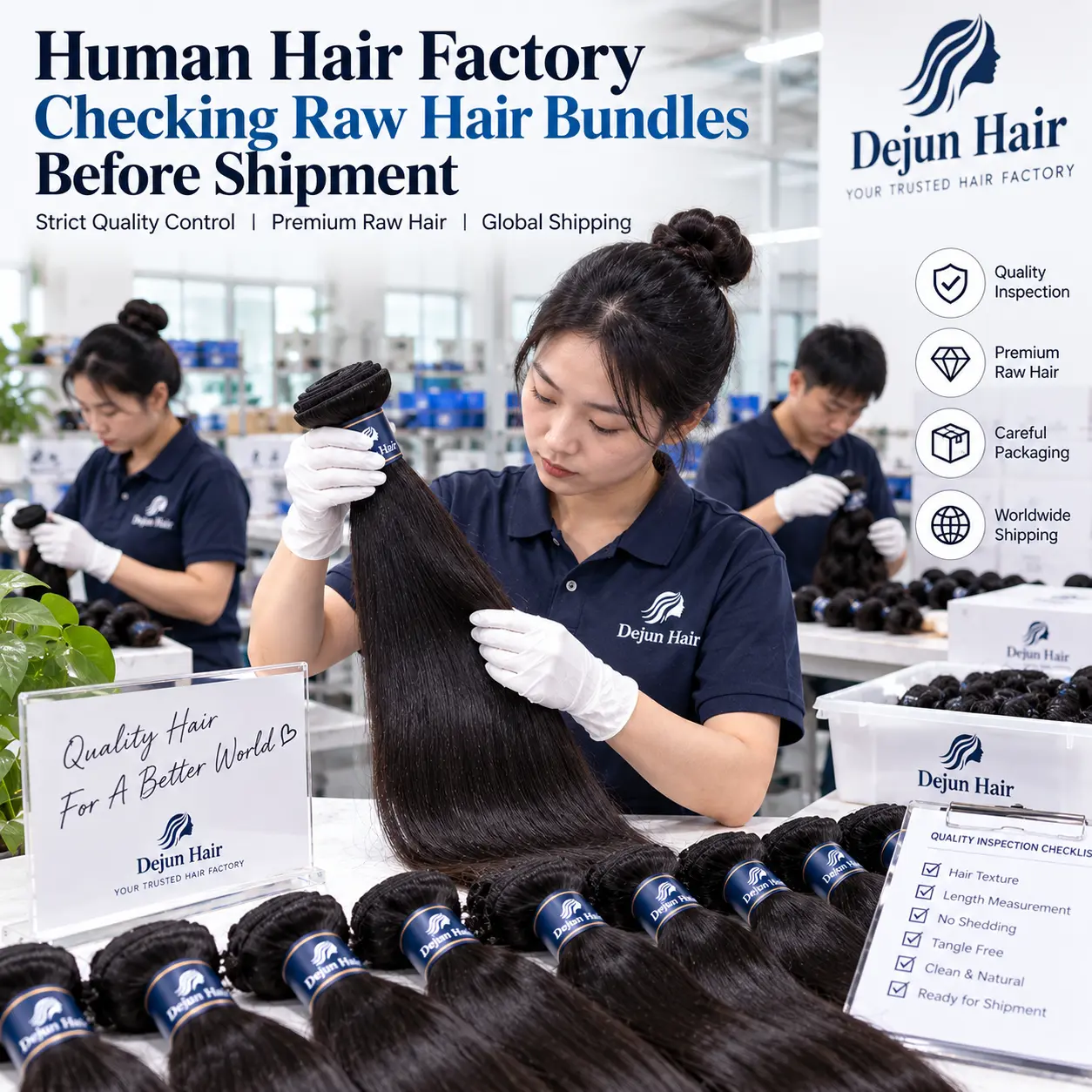
Depending on the product, inspection may cover bundle weight, length, hair condition, weft strength, shedding, texture, color, and packaging.
At Dejun’s production facility in Shaoyang, Hunan, our manufacturing workflow integrates hair processing, wig production, lace work, styling, quality inspection, and warehousing. For B2B buyers, this type of integrated production structure helps make it easier to control specifications from production through final inspection.
8. Understand the After-Sales Policy
Even a strong quality-control process cannot guarantee that every shipment will be completely free from problems.
What matters is how the supplier handles a legitimate issue.
Before ordering, ask how defective products are reported, what evidence is required, how quickly complaints are reviewed, and whether confirmed manufacturing defects qualify for replacement or another agreed solution.
A long-term supplier relationship needs a clear process for solving problems, not just making sales.
How to Test Raw Virgin Hair Before Placing a Bulk Order
Samples are one of the most useful risk-control tools available to wholesale buyers.
However, opening a package, touching the hair for two minutes, and deciding that it “feels soft” is not a sufficient test.
If you plan to sell the product to customers, test it more as a customer would use it.
Start With a Visual and Physical Inspection
Check the bundle’s overall appearance, length, weight, ends, texture, weft construction and natural color variation.
Run your fingers through the hair and observe whether there is unusual tangling or excessive loose hair.
Compare multiple bundles whenever possible.
Wash the Hair
Many problems become easier to identify after washing.
Use an appropriate hair-care routine and observe how the hair behaves before, during, and after washing.
Does the texture recover properly? Does tangling increase significantly? Is shedding within an acceptable range for the product construction?
Do not judge raw virgin hair bundles only by their appearance immediately after opening the package.
Test Styling Performance
If your customers commonly straighten, curl, or restyle the hair, your sample test should reflect those use cases.
Use reasonable styling temperatures and proper hair-care practices.
You are trying to determine whether the product can deliver the performance your customers expect—not to deliberately damage the sample.
Evaluate Color Processing Carefully
If your business plans to sell bleached or colored raw hair, discuss this with the supplier before testing.
Hair response to chemical processing can vary, and aggressive bleaching can damage even good human hair.
Rather than assuming every bundle will reach every desired shade safely, establish the intended processing requirements with your supplier and test samples before placing a large customized order.
Keep Records
Record the sample SKU, length, texture, weight, test date, washing results, shedding observations, styling results, and supplier information.
When comparing several raw hair vendors for wholesale, documented testing is far more reliable than memory.
Vietnamese vs. Indian vs. Burmese Raw Hair: Does Origin Really Matter?
Buyers searching for the best raw hair bundles frequently encounter labels such as Vietnamese raw hair, Indian raw hair, and Burmese raw hair.
Origin can be part of a product specification, but buyers should be careful about using the country name as a shortcut for quality.
Two products carrying the same origin label can perform differently depending on sourcing, sorting, processing, manufacturing, storage, and quality control.
For that reason, ask your supplier how its origin claims are documented and how products are categorized.
More importantly, test the actual hair.
For a B2B buyer, traceability, sample performance, specification accuracy, and batch consistency are generally more useful purchasing criteria than relying on an origin name alone.
If your customers specifically request Indian, Vietnamese, Burmese, or another hair category, communicate that requirement clearly during sourcing and establish exactly what specification your supplier is offering.
Understanding MOQ, Wholesale Pricing and Custom Orders
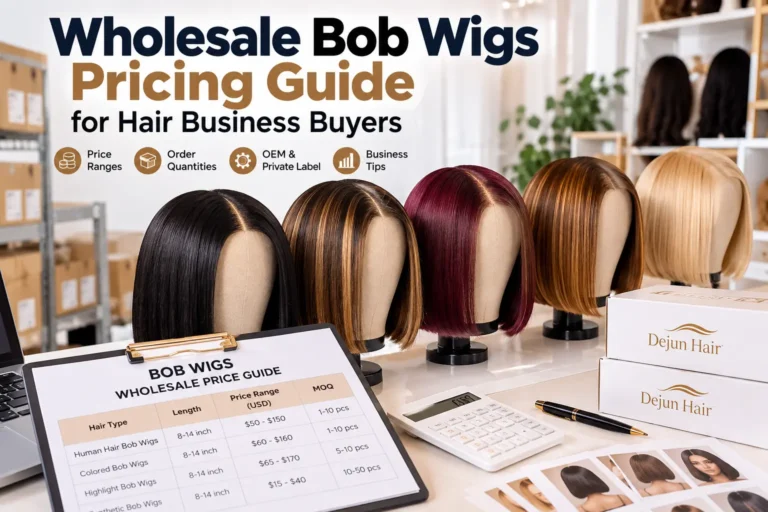
Buyers naturally want a competitive raw virgin hair wholesale price. But comparing quotations requires more than looking at the number beside each length.
A wholesale quotation can be affected by hair quality, length, texture, bundle weight, order volume, customization, packaging, processing requirements, and shipping terms.
Longer lengths generally require more costly raw material than shorter lengths, while customized specifications may require additional production steps.
When requesting a quotation, send every supplier the same specification.
For example:
“Please quote 100 bundles of raw human hair, mixed 16–24 inches, with the required texture, bundle weight, packaging requirements, destination country, and requested delivery schedule.”
This produces a much more useful comparison than simply asking:
“How much are your raw bundles?”
The Lowest Unit Price May Not Produce the Lowest Total Cost
Suppose Vendor A offers a slightly lower price but creates more customer returns, inconsistent inventory, and frequent replacement problems.
Vendor B costs slightly more but provides stable quality and repeatable specifications.
The second supplier may generate a lower total purchasing cost over time.
Wholesale buyers should therefore evaluate price + quality + consistency + service + delivery + defect risk, rather than price alone.
Red Flags When Searching for Raw Hair Vendors
A polished Instagram account or attractive website does not automatically prove that a vendor has a reliable supply chain.
Watch for warning signs during the sourcing process:
- Product descriptions are vague or constantly changing.
- Every product is promoted using exaggerated grade claims without clear specifications.
- The vendor refuses reasonable sample testing.
- Quotations are unusually low, but the supplier cannot explain the product specification.
- Bundle weights or lengths are inconsistent.
- Sample quality is good, but repeat orders change significantly.
- The vendor cannot explain its quality-control process.
- Customization promises are not supported by clear production details.
- Lead-time promises appear unrealistic for the requested quantity.
- There is no clear procedure for handling confirmed defects.
One red flag does not always prove that a vendor is unreliable. However, several warning signs together should encourage a buyer to investigate further before sending a large payment.
A Safer First-Order Strategy for Small Hair Businesses
New entrepreneurs often ask how to find the best raw hair vendors for business, but there is rarely one supplier that is automatically “best” for every company.
Your ideal vendor depends on your target customer, product positioning, order size, required quality, customization needs, and budget.
For a small business, a safer sourcing process is:
Sample → Test → Small Mixed Trial Order → Customer Feedback → Repeat Order → Larger Bulk Order
This approach helps you answer important questions before committing significant capital.
Which lengths sell fastest?
Do your customers prefer straight, body wave, curly, or another texture?
How much are they willing to pay?
Does the product generate repeat purchases?
Are customers satisfied after washing and wearing the hair?
Once you have real sales data, you can increase order quantities for the strongest SKUs rather than guessing.
Questions to Ask Raw Virgin Hair Wholesale Suppliers
Before placing an order, create a standard supplier questionnaire. This makes comparisons much easier.
Ask:
- What exactly is the hair specification?
- How is the hair sourced and processed?
- What is the standard weight per bundle?
- What lengths and textures are available?
- What is the MOQ for stock products?
- Can different lengths or textures be mixed in one order?
- Can I order samples before wholesale purchasing?
- What OEM or private-label services are available?
- Can you customize packaging, tags, logos, or product specifications?
- What is the production lead time for my expected quantity?
- How do you inspect products before shipment?
- What is your policy for confirmed manufacturing defects?
- What shipping methods are available to my country?
- Can you provide the commercial documents required for international shipping?
- How do you maintain quality consistency between repeat orders?
The answers should help you narrow a long raw hair vendor list into a much smaller group of suppliers worth testing.
Working With a Raw Hair Factory vs. a Reseller
Both factories and resellers can have a place in the hair supply chain.
A reseller may be convenient for certain small or urgent purchases. A factory relationship becomes particularly valuable when buyers need larger volumes, repeatable specifications, OEM/ODM development, private labeling, or a wider product range.
Direct communication with a manufacturer can also make it easier to discuss product construction and customization in detail.
Dejun has been involved in wig and human hair manufacturing in Shaoyang, China, for around 20 years. Our production capabilities cover human hair processing and multiple finished wig categories, allowing overseas buyers to source hair bundles, Wholesale Wigs, lace products, and customized wig programs through a more integrated supply chain.
For buyers, however, factory status should still be verified through samples, specifications, communication, and order performance.
A factory should earn a long-term order through consistent results—not simply by calling itself a manufacturer.
Final Checklist: How to Find Raw Hair Vendors You Can Work With Long Term
Finding reliable raw hair vendors is a process of verification rather than searching for one magical supplier list.
Start by defining exactly what your customers need. Compare suppliers using the same product specifications. Request samples and test them under realistic conditions. Evaluate MOQ, customization, quality control, lead time, and after-sales support alongside price.
Most importantly, do not move directly from an attractive product photo to a large bulk order.
Use a structured sourcing process:
Verify → Sample → Test → Compare → Trial Order → Review → Scale
For salons, wholesalers, online hair brands, and growing distributors, this approach can reduce sourcing risk while helping build a more stable product line.
If you are currently sourcing raw hair bundles wholesale or developing a private-label human hair product line, Dejun can discuss your required lengths, textures, order quantity, packaging, customization, and target market before production.
Request samples and wholesale pricing first, compare the actual product performance, and scale your order only when the specifications meet your business requirements.
High Quality
All of our products have undergone production and quality control and come with certificates
Fast Delivery
Our supply chain management is a model of standardization and professionalism in the wig manufacturing industry, ensuring that our customers receive their wigs on time.
Customer Service
Fill out the wig order form to customize your base, size, hair length, and color.