
Leave your Message

-
Yongqi Chen sales consultant
-
Phone/WhatsApp: +86 13187012919
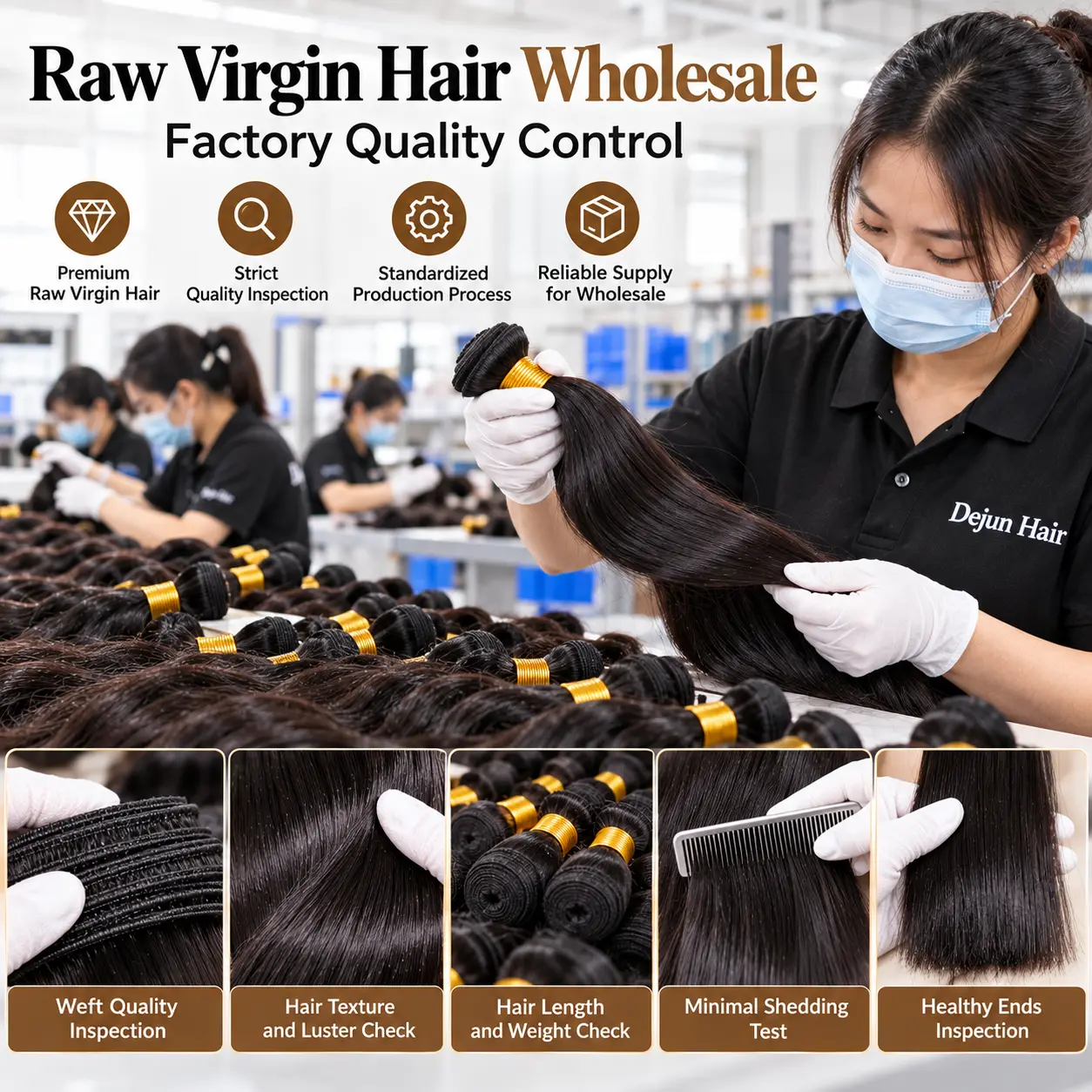
Raw Virgin Hair Wholesale Guide: How to Source Quality Hair in Bulk
Table Of Contents
- 1. What Is Raw Virgin Hair?
- 2. Why Raw Virgin Hair Is Popular in the Wholesale Market
- 3. Types of Raw Virgin Hair for Wholesale Buyers
- 4. How to Evaluate Raw Virgin Hair Quality Before Buying in Bulk
- 5. How to Find Reliable Raw Virgin Hair Wholesale Suppliers
- 6. Raw Virgin Hair Wholesale Prices: What Affects the Cost?
- 7. MOQ and Bulk Ordering Options for Different Businesses
- 8. OEM and Private Label Options for Raw Virgin Hair
- 9. Shipping Raw Virgin Hair for International Wholesale Orders
- 10. Common Mistakes to Avoid When Buying Raw Virgin Hair Wholesale
- 11. Why Work With an Experienced Hair Manufacturer?
- 12. Frequently Asked Questions About Raw Virgin Hair Wholesale
- What is the difference between raw hair and virgin hair?
- How can I find reliable raw virgin hair wholesale vendors?
- Can small businesses buy raw virgin hair wholesale?
- How much does raw virgin hair cost wholesale?
- Is raw virgin hair suitable for bleaching and coloring?
- How long does raw virgin hair last?
- Can I customize raw virgin hair bundles with my own brand?
- Conclusion: How to Buy Raw Virgin Hair in Bulk With Confidence
Finding a reliable raw virgin hair wholesale supplier is one of the most important decisions for any hair business. Whether you operate a beauty salon, sell hair extensions online, or distribute human hair bundles to local retailers, your supplier directly affects product quality, customer satisfaction, and long-term profitability.
However, buying raw virgin hair in bulk is not always straightforward.
Some suppliers advertise unprocessed human hair at unusually low prices, while others use terms such as “raw,” “virgin,” and “Remy” interchangeably. Buyers may also encounter inconsistent hair textures, excessive shedding, unclear minimum order quantities (MOQs), or bulk shipments that differ from approved samples.
For small businesses, these problems can quickly turn a promising wholesale purchase into expensive inventory.
The solution is to understand what you are purchasing, establish clear quality standards, and work with a supplier capable of delivering consistent products.
In this raw virgin hair wholesale guide, we explain how to evaluate hair quality, compare different hair types, understand wholesale pricing, negotiate MOQ requirements, and select reliable manufacturers for long-term bulk purchasing.
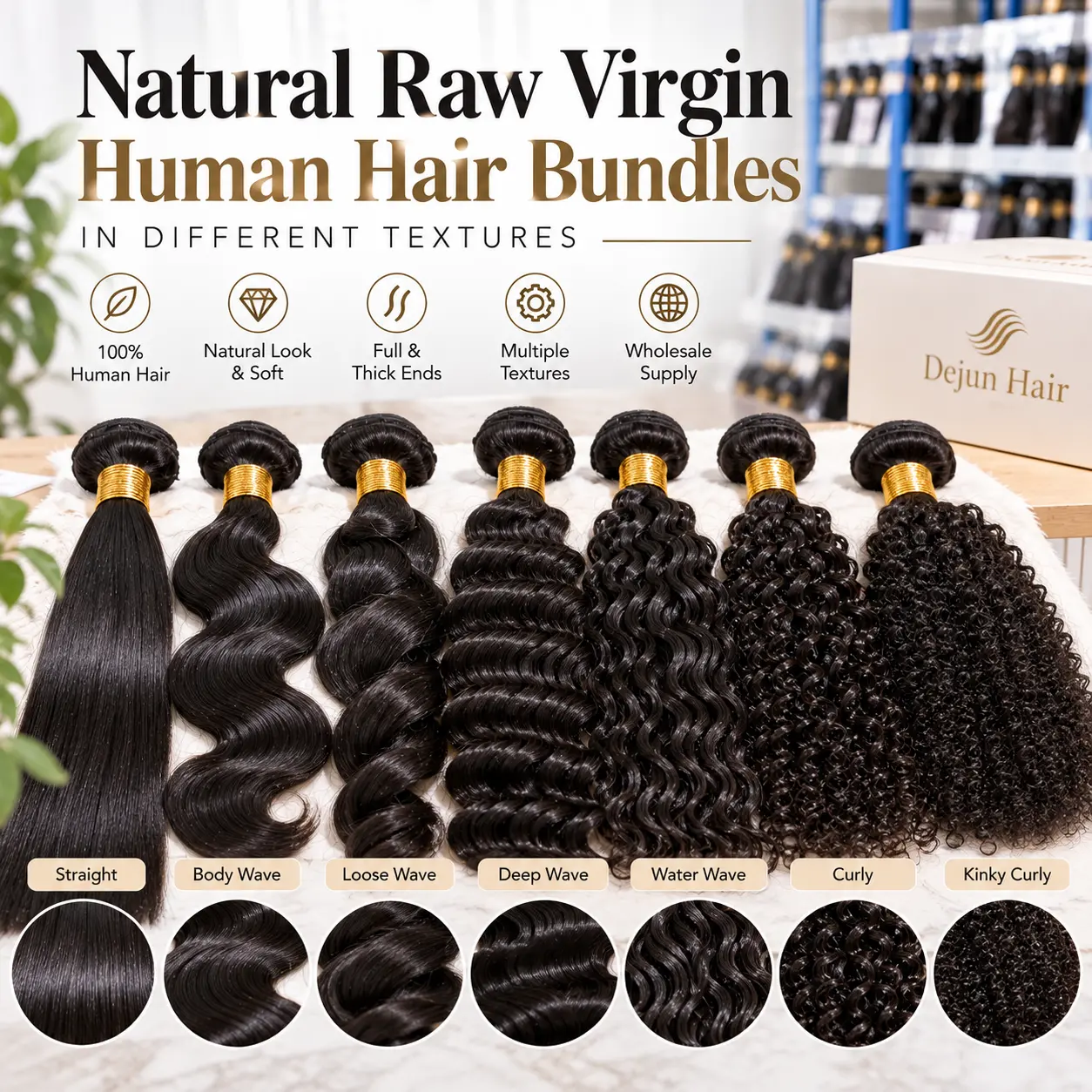
1. What Is Raw Virgin Hair?
Raw virgin hair generally refers to human hair marketed as both minimally processed and free from chemical treatments such as bleaching, permanent coloring, or perming.
However, there is an important distinction between raw hair and virgin hair.
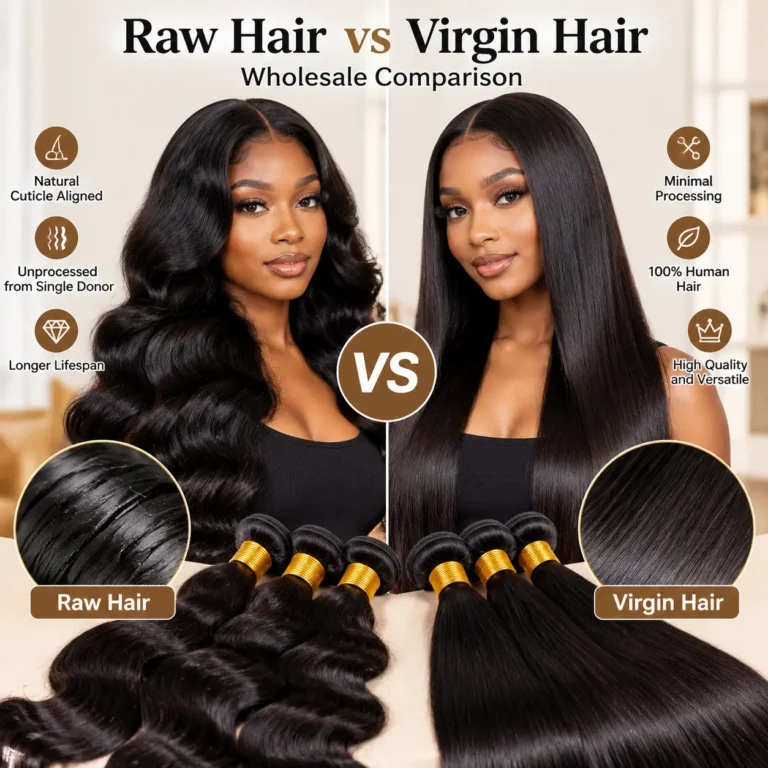
- Raw hair: Usually refers to human hair that has not undergone chemical texture alteration or coloring. It may retain natural variations in wave pattern, color, and texture.
- Virgin hair: Generally refers to hair that has not been chemically treated before collection, although some suppliers also use the term for hair that has undergone limited processing afterward.
- Remy hair: Refers to hair with cuticles aligned in the same direction. Remy hair is not necessarily raw or virgin.
These terms describe different characteristics and are not universally standardized across the hair industry.
For wholesale buyers, the label alone is not enough to establish quality.
A supplier offering wholesale raw virgin human hair should explain the hair’s processing history, cuticle alignment, sourcing claims, and any treatments performed before shipment.
Raw Hair vs. Virgin Hair: What Should Buyers Know?
The main difference is that raw hair generally emphasizes minimal processing, while virgin hair emphasizes the absence of previous chemical treatments.
A product may satisfy both descriptions, but buyers should verify the supplier’s specifications rather than assume the terms are interchangeable.
Raw hair may be attractive to premium salons seeking natural textures, while commercially prepared virgin hair may offer a more uniform appearance across larger batches.
For a detailed comparison of processing methods, coloring performance, durability, and purchasing value, read our Raw Hair vs. Virgin Hair buying guide.
Editorial note: The comparison article’s exact URL should be verified before publication; the temporary homepage link above should be replaced with its live article URL.
2. Why Raw Virgin Hair Is Popular in the Wholesale Market
For hair retailers and salons, raw virgin hair can support a premium product offering when its quality and sourcing claims are properly verified.
Unlike heavily processed extensions, minimally processed human hair may retain more of its original characteristics, making it appealing to customers who prioritize natural appearance and styling flexibility.
Natural Appearance and Texture
Raw human hair bundles often display subtle variations in color and texture.
These characteristics can help create a natural-looking installation, particularly when the hair is carefully matched to the customer’s existing hair.
For salons serving clients who prefer natural black, soft waves, or textured extensions, this can be an important selling point.
Styling and Coloring Flexibility
High-quality raw virgin hair can often be straightened, curled, or professionally colored.
However, its coloring performance depends on the hair’s condition, previous treatment history, and the chemicals used.
Wholesale buyers should never assume that every bundle labeled “raw virgin” can safely reach very light blonde shades.
Testing a sample before promising specific coloring results is essential.
Potential for Repeat Business
Customers who receive consistent hair quality are more likely to return to the same salon or retailer.
For wholesale distributors, reliable products can also reduce complaints about tangling, shedding, and inconsistent textures.
This makes quality consistency particularly important when building a long-term hair extensions business.
Opportunities for Premium Positioning
Verified raw virgin hair bundles may support higher retail positioning than lower-grade processed extensions.
However, higher selling prices do not automatically guarantee higher profits.
Businesses must also consider sourcing costs, shipping expenses, inventory turnover, marketing costs, and after-sales service.
The most profitable product is not necessarily the most expensive one. It is the product that consistently meets customer expectations at a sustainable margin.
3. Types of Raw Virgin Hair for Wholesale Buyers
When searching for raw virgin hair wholesale vendors, buyers frequently encounter product descriptions associated with different countries or regions.
Common examples include Indian, Vietnamese, and Cambodian hair.
These labels can be useful when discussing product characteristics, but they do not guarantee a particular texture, quality grade, or country of origin.
The following descriptions represent common market positioning, not universal characteristics of hair from these countries.
Raw Indian Hair
Raw Indian hair is commonly marketed in natural straight, wavy, and curly textures.
Depending on the source and collection method, bundles may have noticeable variations in strand thickness and wave pattern.
For wholesalers, Indian hair can be suitable for businesses offering natural-looking extensions and a range of textures.
Before purchasing, confirm whether the hair is single-donor or mixed-donor, whether the cuticles are aligned, and whether any processing has been performed.
Raw Vietnamese Hair
Vietnamese hair is often marketed as smooth, relatively straight, and suitable for sleek extension styles.
It may appeal to customers seeking straight bundles, long hairstyles, or products intended for professional styling.
However, buyers should not assume that every product labeled Vietnamese hair has identical characteristics.
Request actual product photographs, washing-test videos, and clear sourcing information.
Raw Cambodian Hair
Cambodian hair is frequently promoted for fuller-looking textures and natural body.
Some suppliers offer straight, wavy, and curly variations.
The actual characteristics depend on the collected hair and any processing involved.
For bulk orders, buyers should evaluate strand consistency, texture retention after washing, and whether repeat orders can match previously approved samples.
Comparing Common Raw Hair Categories
| Hair category | Common market positioning | Important buying consideration |
|---|---|---|
| Indian Hair | Natural texture variety | Verify texture, processing, and donor claims |
| Vietnamese Hair | Smooth, sleek styles | Check consistency and authenticity of origin |
| Cambodian Hair | Fuller-looking natural textures | Test texture retention and batch uniformity |
| Other Origin-Labeled Hair | Varies by supplier | Request traceability and actual specifications |
Wholesale buying tip: Choose products based on verified quality and customer demand, not country-of-origin labels alone.
A dependable supplier should be willing to explain which characteristics are verified and which are simply product marketing descriptions.
4. How to Evaluate Raw Virgin Hair Quality Before Buying in Bulk
One of the biggest mistakes in raw virgin hair wholesale purchasing is relying entirely on product photographs.
Professional lighting, styling products, and temporary treatments can make lower-quality hair appear more attractive than it actually is.
Before placing a substantial order, evaluate physical samples using a consistent inspection process.
Check Hair Softness and Strand Condition
Run your fingers through the bundle from top to bottom.
Look for excessive roughness, unusual dryness, and irregular strand condition.
A good sample should feel appropriate for its natural texture without requiring heavy silicone coating to create temporary smoothness.
However, softness alone does not prove that hair is raw or virgin.
Examine Cuticle Alignment
Hair with properly aligned cuticles generally experiences less friction between strands.
Misaligned cuticles can contribute to tangling, particularly after repeated washing.
Ask the supplier how the hair is collected, sorted, and assembled into bundles.
For premium orders, request evidence supporting any specific cuticle-alignment claims.
Perform a Washing Test
Wash the sample with a mild shampoo and follow the supplier’s recommended care procedure.
Allow the hair to air-dry before evaluating its natural appearance.
Check whether:
- The texture remains consistent with the supplier’s description.
- Excessive tangling develops during washing.
- Unusual color bleeding occurs.
- The hair becomes significantly rougher after drying.
- Heavy product coatings appear to have been masking its condition.
A washing test is particularly useful because it helps reveal the hair’s condition without the styling products used for presentation.
Test Shedding and Weft Construction
Gently comb the sample and observe loose strands.
Some shedding is normal, especially during initial handling, but excessive shedding can indicate poor weft construction or damaged hair.
For machine-weft bundles, examine the stitching and attachment strength.
For bulk purchasing, ask the supplier to agree on measurable inspection criteria rather than relying only on descriptions such as “minimal shedding.”
Evaluate Coloring Performance
If your customers regularly request blonde, highlighted, or custom-colored extensions, conduct a controlled strand test.
Professional coloring can reveal differences in processing history and hair condition.
Record the color result, hair condition after treatment, and any unexpected breakage.
A single successful coloring test does not guarantee identical results across every future batch, so consistency remains important.
Compare Samples Against Bulk Production
An approved sample should become a reference for future orders.
Document the hair length, weight, texture, color, weft construction, and acceptable quality tolerances.
Before shipment, request photographs or inspection records showing that the finished products match the agreed specifications.
5. How to Find Reliable Raw Virgin Hair Wholesale Suppliers
Finding raw virgin hair wholesale suppliers is relatively easy. Finding a supplier capable of maintaining consistent quality across repeat orders requires more careful evaluation.
Buyers should assess the supplier’s business operations, product knowledge, quality-control procedures, and ability to support international wholesale customers.
Verify Whether the Supplier Is a Manufacturer or Trading Company
Manufacturers and trading companies can both serve wholesale customers, but their capabilities may differ.
A manufacturer with in-house production can often provide more direct control over processing, weft construction, customization, and quality inspections.
A trading company may offer a broader selection from several factories.
Ask prospective suppliers which operations they perform themselves and which are outsourced.
Useful questions include:
- Do you operate your own production facility?
- Which stages of production are completed in-house?
- Can you provide factory photographs or production videos?
- How do you verify the quality and processing history of purchased hair?
- Can you maintain consistent specifications for repeat orders?
These questions help buyers understand the supplier’s actual role in the supply chain.
Review Quality-Control Procedures
A professional supplier should be able to explain its inspection process.
For raw virgin hair bundles wholesale orders, important checks include bundle weight, length, texture, weft security, shedding, and overall condition.
Ask whether inspections are performed before packing and whether records can be provided for larger shipments.
Confirm Supply Capacity
A supplier may deliver excellent samples but struggle to fulfill large orders consistently.
Ask about production lead times, available inventory, raw material sourcing, and the ability to reproduce the same specifications.
This is especially important for distributors supplying multiple salons or retailers.
Evaluate Communication and After-Sales Support
Reliable communication can prevent costly misunderstandings.
Your supplier should provide clear quotations, explain MOQ requirements, confirm specifications in writing, and communicate potential production delays.
Before placing an order, clarify how defective products, shortages, or specification discrepancies will be handled.
At Dejun Wig Factory, our manufacturing operations in Shaoyang, Hunan, China, cover hair processing, cap production, lace sewing, styling, inspection, and warehousing.
With approximately 20 years of local manufacturing experience, we understand why overseas buyers need consistent specifications, flexible wholesale ordering, and practical after-sales support.
For buyers comparing potential manufacturing partners, these operational capabilities should be evaluated alongside hair sourcing transparency and sample quality.
6. Raw Virgin Hair Wholesale Prices: What Affects the Cost?
Understanding raw virgin hair wholesale prices helps businesses compare quotations and protect their profit margins.
There is no single reliable wholesale price for every type of raw virgin hair.
Pricing varies according to the product’s actual specifications, sourcing costs, availability, order volume, and required customization.
Hair Quality and Processing History
Verified, minimally processed hair may cost more to source than heavily processed or mixed-quality alternatives.
Hair marketed as single-donor or traceable-origin hair may also carry a premium.
Buyers should request supporting information rather than paying higher prices based only on product labels.
Hair Length
Longer hair generally commands higher prices because suitable long strands are less readily available.
The price difference between short and long bundles can become substantial, particularly for premium grades.
When comparing suppliers, confirm whether the advertised length refers to the stretched length or the natural hanging length.
Bundle Weight
Wholesale bundles are frequently offered in approximately 100-gram units, although other weights are available.
Always confirm the actual net hair weight and whether packaging or attachments are included in the stated weight.
A cheaper bundle with less hair may offer poorer value than a higher-priced bundle with accurate specifications.
Texture and Product Availability
Naturally occurring textures, especially those requiring careful sorting, can influence pricing.
Consistent supply of a specific texture may also affect production lead times.
Order Quantity
Larger orders may qualify for volume-based pricing because production, packing, and administrative costs can be distributed across more units.
However, discounts depend on the supplier’s costs and the specifications ordered.
Custom Packaging and Private Label Requirements
Branded packaging, printed tags, special bundle configurations, and custom product labeling can increase the initial order cost.
These expenses should be included when calculating your landed cost.
How to Compare Wholesale Quotations
| Cost factor | What buyers should confirm |
|---|---|
| Hair grade | Exact quality and processing specifications |
| Length | Measurement method and tolerance |
| Bundle weight | Net weight per bundle |
| Texture | Natural or mechanically/chemically altered |
| MOQ | Minimum quantity by style, length, or order |
| Packaging | Standard or custom-branded |
| Shipping | Freight method, destination, and Incoterms |
| After-sales | Defect policy and claim procedure |
Instead of choosing the lowest unit price, compare the total landed cost and the expected quality consistency.
For example, an inexpensive shipment that produces high customer return rates may ultimately cost more than a slightly higher-priced shipment with dependable quality.
7. MOQ and Bulk Ordering Options for Different Businesses
Minimum order quantity is a major concern for buyers searching for raw virgin hair wholesale with low MOQ.
Established distributors may purchase hundreds of bundles at a time, while new hair businesses often prefer smaller initial orders.
A reliable supplier should explain its MOQ structure clearly.
Small Wholesale Orders
For new businesses, smaller orders can help test product quality and customer demand before committing significant capital.
Buyers should ask whether the supplier supports mixed lengths, multiple textures, or different products within one order.
Mixed orders can be especially useful for testing a new market.
Bulk Orders for Established Distributors
Larger wholesalers often prioritize stable pricing, consistent specifications, and predictable replenishment schedules.
For these buyers, negotiating an ongoing supply arrangement may be more valuable than obtaining the lowest possible price on a single shipment.
Custom Order MOQ
Customized hair products may require different minimum quantities from ready-stock products.
Special textures, bundle configurations, branded packaging, or custom wig construction can affect production requirements.
At Dejun, we support flexible wholesale purchasing and mixed-product orders where available. Custom-order MOQ is discussed according to product specifications and production requirements.
Recommended First-Order Strategy
For a new hair business, a practical approach is to:
- Request a small selection of samples.
- Test quality and customer response.
- Select a limited number of core products.
- Confirm repeat-order availability.
- Increase purchasing volume as sales become more predictable.
This approach reduces the risk of tying up working capital in untested inventory.
8. OEM and Private Label Options for Raw Virgin Hair
For entrepreneurs and established hair brands, OEM and private label services can help differentiate products in a competitive market.
Instead of selling generic bundles, businesses can develop a consistent brand presentation and product specification.
Custom Hair Specifications
Depending on manufacturing capabilities and material availability, customization may include:
- Hair length and bundle weight
- Straight, wavy, or curly texture selections
- Hair color and product grading specifications
- Weft construction and bundle configuration
- Matching closures, frontals, or wig products
For products marketed as raw and unprocessed, any coloring or texture alteration must be disclosed accurately.
A chemically colored product should not continue to be marketed as completely unprocessed raw hair.
Private Label Packaging
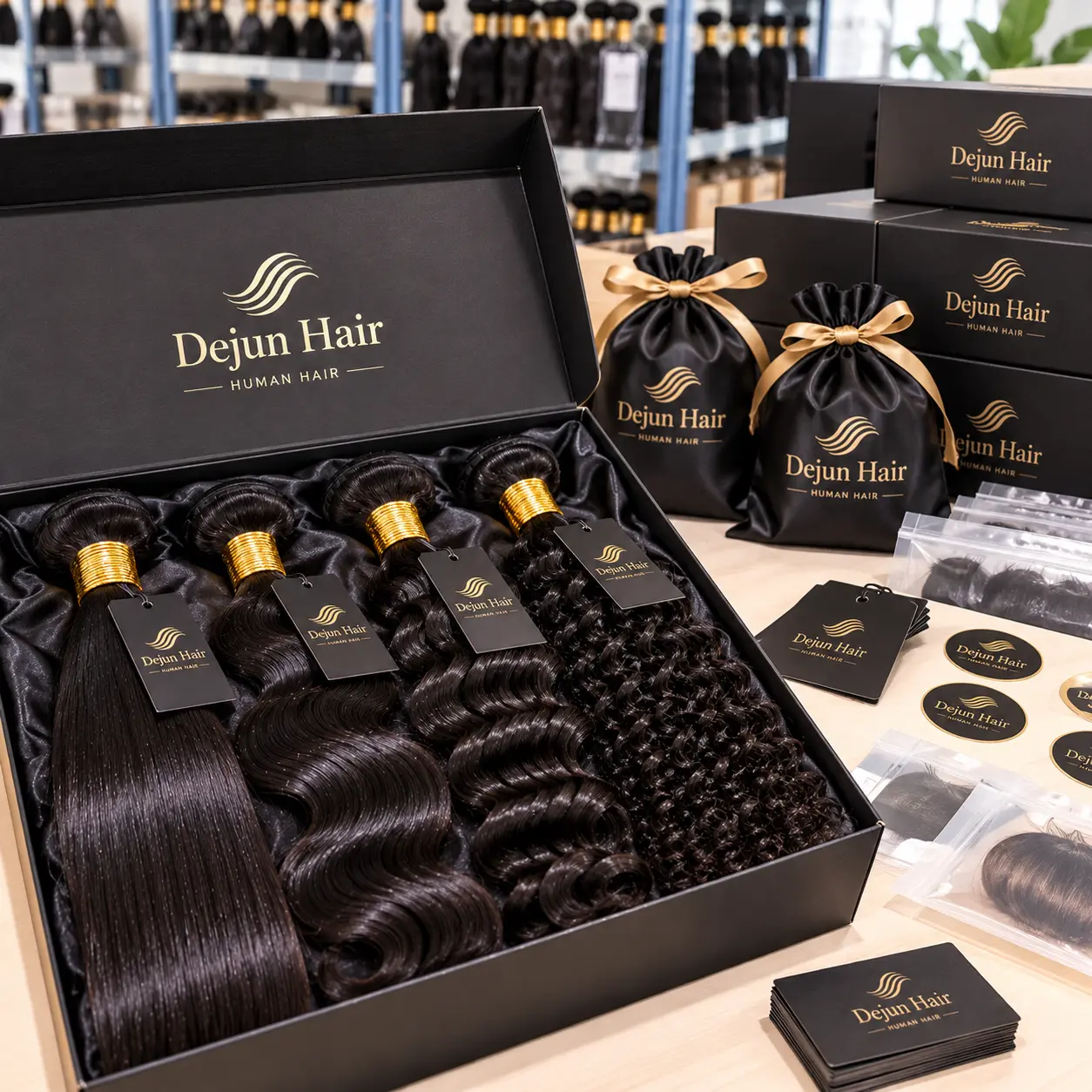
Custom packaging can include branded boxes, satin bags, hang tags, care instructions, and logo labels.
Professional packaging can improve product presentation and create a more recognizable brand experience.
For online sellers, clear product information and consistent packaging are also important for reducing customer confusion.
OEM and ODM Wig Manufacturing
Some hair businesses eventually expand from selling bundles into finished wigs.
Working with a manufacturer that supplies both human hair materials and finished wigs can simplify product development and purchasing coordination.
Dejun supports OEM/ODM services covering wig construction, cap size, density, length, lace material, product styling, and branded packaging.
These capabilities allow wholesale buyers to explore a broader product range as their businesses grow.
9. Shipping Raw Virgin Hair for International Wholesale Orders
International shipping is another important consideration when choosing raw virgin hair bulk suppliers.
A supplier offering competitive product pricing may not be the best choice if shipping arrangements are unreliable or customs documentation is incomplete.
Air Freight and Express Shipping
Air shipping and express courier services are often suitable for samples, smaller wholesale orders, and urgent replenishment.
Delivery speed and costs depend on the destination, shipment weight, carrier, and customs processing.
Sea Freight for Larger Orders
Sea freight may be more economical for sufficiently large consolidated shipments, although it generally requires longer transit times.
For hair products, which are relatively compact and often high in value, air shipping may remain commercially practical even for some larger orders.
Compare total freight costs before choosing a method.
Customs Documentation
International buyers should confirm the required documentation before shipment.
Depending on the destination, documents may include a commercial invoice, packing list, transport documents, and additional import or product information.
Customs requirements vary by country and product classification.
A supplier can assist with documentation, but the importer should verify local regulations and applicable duties.
Confirm Shipping Terms Before Payment
Ask your supplier to specify the agreed Incoterms, freight charges, insurance arrangements, and responsibility for import duties.
Clear shipping terms reduce the risk of unexpected charges or disputes.
Dejun works with international wholesale customers in African, European, and North American markets and can assist buyers in discussing available shipping channels and export documentation.
10. Common Mistakes to Avoid When Buying Raw Virgin Hair Wholesale
Even experienced hair retailers can make purchasing mistakes when evaluating unfamiliar suppliers.
Understanding these risks can help protect your business.
Choosing Suppliers Based Only on Price
Extremely low prices can indicate differences in hair quality, weight, processing, or product specifications.
A low quotation is not necessarily fraudulent, but it should be investigated carefully.
Always compare equivalent products.
Skipping Sample Testing
Product photographs cannot replace physical inspection.
Samples help buyers evaluate hair texture, shedding, washing performance, and styling characteristics.
Assuming All Virgin Hair Is Raw
Virgin and raw are not identical quality classifications.
Ask suppliers to define their terminology and explain any processing performed.
Ignoring Batch Consistency
A strong first shipment does not guarantee consistent repeat orders.
Maintain approved samples and written product specifications.
Ordering Too Many Styles Initially
New businesses sometimes purchase excessive lengths, colors, and textures before understanding customer demand.
Start with a manageable selection and expand based on actual sales.
Failing to Confirm After-Sales Terms
Clarify defect definitions, inspection periods, return procedures, and responsibility for shipping costs before payment.
Written terms are especially important for international transactions.
11. Why Work With an Experienced Hair Manufacturer?
A dependable manufacturing partner can provide more than a product quotation.
For wholesale buyers, long-term supply stability depends on production coordination, material quality, clear communication, and practical support.
Dejun Wig Factory is a manufacturing business based in Shaoyang, Hunan, China, with approximately 20 years of local production experience.
Our operations cover human hair products, synthetic wigs, lace wigs, and customized hair solutions for international wholesale customers.
Integrated Production Capabilities
Our production operations include hair processing, wig cap construction, lace sewing, styling, inspection, and warehousing.
This integrated structure supports coordination across different stages of manufacturing.
Product Range for Different Markets
We supply a range of human hair bundles, lace front wigs, full lace wigs, glueless wigs, bob wigs, and synthetic hair products.
This allows customers to source multiple product categories through one manufacturing partner.
Flexible Wholesale and Customization Services
We support ready-stock wholesale orders, mixed-product purchasing where available, and OEM/ODM customization.
MOQ, sample arrangements, and production lead times are confirmed according to the specific products requested.
Quality Inspection and Customer Support
Our production quality-control process includes checks related to hair condition, construction security, color consistency, and product dimensions.
We also provide product care guidance and support customers in resolving confirmed manufacturing defects according to agreed after-sales terms.
For raw virgin hair specifically, buyers should request confirmation of available grades, sourcing information, and processing history before ordering.
Our goal is to help wholesale customers establish practical, repeatable purchasing arrangements rather than simply complete one transaction.
12. Frequently Asked Questions About Raw Virgin Hair Wholesale
What is the difference between raw hair and virgin hair?
Raw hair generally refers to hair that has undergone minimal processing, while virgin hair refers to hair that has not previously been chemically treated. Supplier definitions vary, so buyers should confirm the actual processing history before purchasing.
How can I find reliable raw virgin hair wholesale vendors?
Look for suppliers with transparent product specifications, verifiable operations, clear quality-control procedures, and consistent sample results. Confirm their ability to fulfill repeat orders and resolve quality problems.
Can small businesses buy raw virgin hair wholesale?
Yes. Some suppliers offer small wholesale orders or mixed-product purchasing. MOQ varies according to hair type, length, availability, and customization requirements.
How much does raw virgin hair cost wholesale?
Prices depend on hair quality, length, bundle weight, sourcing, texture, and order quantity. Request a detailed quotation based on specific requirements rather than relying on generic advertised prices.
Is raw virgin hair suitable for bleaching and coloring?
High-quality raw virgin hair may be suitable for professional coloring, but results vary. Always perform a strand test and avoid promising specific bleaching levels without verifying the hair’s condition.
How long does raw virgin hair last?
Its usable lifespan depends on the original hair quality, processing history, installation method, maintenance, and frequency of chemical or heat styling. There is no guaranteed lifespan applicable to every product.
Can I customize raw virgin hair bundles with my own brand?
Many manufacturers offer private label packaging, branded tags, and custom product configurations. Customization availability and MOQ should be confirmed with the supplier.
Conclusion: How to Buy Raw Virgin Hair in Bulk With Confidence
Successful raw virgin hair wholesale purchasing requires more than finding an attractive price.
Wholesale buyers should understand hair classifications, inspect samples, verify supplier capabilities, compare total purchasing costs, and establish clear quality expectations before placing large orders.
New businesses can start with smaller quantities to reduce inventory risk. For established distributors, consistent supply, repeatable specifications, and reliable communication are essential for long-term growth.
Working with an experienced manufacturing partner can make these purchasing decisions easier.
At Dejun Wig Factory, we support overseas hair businesses with wholesale human hair products, flexible ordering arrangements, and OEM/ODM customization services.
Whether you are launching a hair brand, expanding your salon inventory, or sourcing products for distribution, we can help you discuss suitable specifications and purchasing options.
Looking for a raw virgin hair wholesale supplier?
Contact Bulk Wig Supply to discuss available hair grades, wholesale quotations, sample options, MOQ requirements, and custom packaging.
High Quality
All of our products have undergone production and quality control and come with certificates
Fast Delivery
Our supply chain management is a model of standardization and professionalism in the wig manufacturing industry, ensuring that our customers receive their wigs on time.
Customer Service
Fill out the wig order form to customize your base, size, hair length, and color.