
Leave your Message

-
Yongqi Chen sales consultant
-
Phone/WhatsApp: +86 13187012919
13×6 Lace Front Wigs Wholesale: A Complete Buying Guide for Wig Businesses
Table Of Contents
- 1. What Are 13×6 Lace Front Wigs?
- 2. 13×6 vs. 13×4 Lace Front Wigs: Which Should You Buy Wholesale?
- 3. How to Choose the Right Hair Quality for Wholesale Orders
- 4. How to Select the Right Lace Type
- 5. Choosing the Right Hair Density, Length, and Texture
- 6. How Much Do 13×6 Lace Front Wigs Cost Wholesale?
- 7. What MOQ Should You Expect When Buying Wholesale?
- 8. How to Choose a Reliable 13×6 Lace Front Wig Supplier
- 9. Why Work Directly With a Wig Manufacturer?
- 10. How to Place Your First Bulk Order Successfully
- Frequently Asked Questions About 13×6 Lace Front Wigs Wholesale
- Is a 13×6 lace front wig better than a 13×4 wig?
- Can I order 13×6 HD lace front wigs in bulk?
- What is the best hair density for wholesale 13×6 wigs?
- Can a wig factory customize 13×6 lace front wigs with my brand logo?
- How can I reduce the risk of a poor-quality bulk order?
- What information should I provide to get a wholesale quotation?
- Conclusion: Find the Right 13×6 Lace Front Wigs Wholesale Partner
Buying 13×6 lace front wigs wholesale can be a profitable opportunity for wig distributors, beauty salons, online retailers, and private-label hair brands. However, choosing the right products for bulk purchasing involves more than comparing prices. Hair quality, lace construction, density, length, minimum order quantity (MOQ), and supplier reliability all influence your costs and your customers’ satisfaction.
For new buyers, ordering too many unsuitable styles can tie up working capital. For established wholesalers, inconsistent quality between batches can lead to customer complaints, returns, and lost repeat business.
So, how can you select the right 13×6 lace front wigs for your market while keeping purchasing costs under control?
In this guide, we explain the essential specifications, quality checks, pricing factors, customization options, and supplier selection criteria that wholesale buyers should understand before placing an order. We will also share practical sourcing advice from the perspective of a wig manufacturer serving international B2B customers.
1. What Are 13×6 Lace Front Wigs?
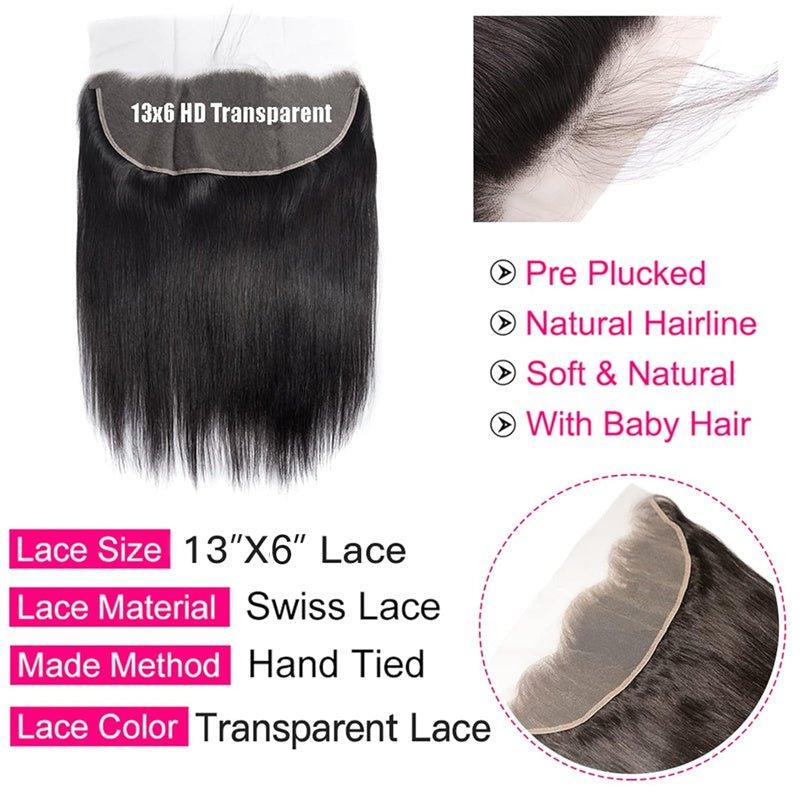
A 13×6 lace front wig features a lace frontal area that measures approximately 13 inches across the front hairline and 6 inches from front to back. This larger lace area provides more styling space than a typical 13×4 lace front wig.
For buyers considering 13×6 human hair lace front wigs, the main commercial advantage is styling flexibility. The wider and deeper lace area allows wearers to create different parting positions and achieve a more natural-looking hairline when the wig is properly fitted and installed.


12
Key features of 13×6 lace front wigs
- Wide frontal coverage: Approximately 13 inches of lace across the front hairline.
- Deeper parting space: Approximately 6 inches of lace depth, allowing more flexibility in creating middle and side parts.
- Natural styling potential: Properly constructed lace and hairline details can create a realistic appearance.
- Multiple hair textures: Straight, body wave, deep wave, curly, and other textures can be offered.
- Different purchasing options: Buyers can select human hair or synthetic alternatives, depending on the product design and target market.
For businesses targeting customers who prioritize realistic hairlines and versatile styling, 13×6 lace front wigs can be a valuable product category.
However, the larger lace area does not automatically guarantee better quality. The actual result depends on lace material, knot construction, hair quality, cap fit, and finishing.
2. 13×6 vs. 13×4 Lace Front Wigs: Which Should You Buy Wholesale?
One of the most common questions buyers ask is whether to stock 13×6 or 13×4 lace front wigs. The answer depends on your customers’ styling preferences, target retail price, and expected profit margin.

13×4 Lace Front Wig
- Approximately 4 inches of lace depth.
- Suitable for everyday styles and conventional parting.
- Can be a practical option for buyers targeting more price-conscious customers.
- Useful for building a broad, entry-to-mid-range inventory.

13×6 Lace Front Wig
- Approximately 6 inches of lace depth.
- Offers more room for parting and styling.
- Can suit premium product collections and customers who value styling versatility.
- Requires careful evaluation of lace quality and construction when comparing quotations.
| Buying factor | 13×4 lace front | 13×6 lace front |
|---|---|---|
| Lace depth | Approximately 4 inches | Approximately 6 inches |
| Parting flexibility | Good | Greater |
| Product positioning | Entry to mid-range, depending on specifications | Mid-range to premium, depending on specifications |
| Cost comparison | Often lower for otherwise comparable specifications | May cost more due to construction and material requirements |
| Ideal inventory role | Core everyday styles | Premium or styling-focused options |
These are general comparisons, not fixed pricing or quality rules. A well-made 13×4 wig can outperform a poorly constructed 13×6 wig.
Our recommendation: If you are entering the wholesale wig market, test both constructions in a small order before committing to a large quantity. Compare customer feedback, selling prices, return rates, and reorder demand before deciding which style deserves more inventory.
3. How to Choose the Right Hair Quality for Wholesale Orders
Hair quality has a direct impact on product performance, customer experience, and your long-term reputation. When sourcing 13×6 human hair lace front wigs, buyers should evaluate the actual hair characteristics rather than relying only on product names or supplier descriptions.
Understand the main hair categories
Virgin human hair
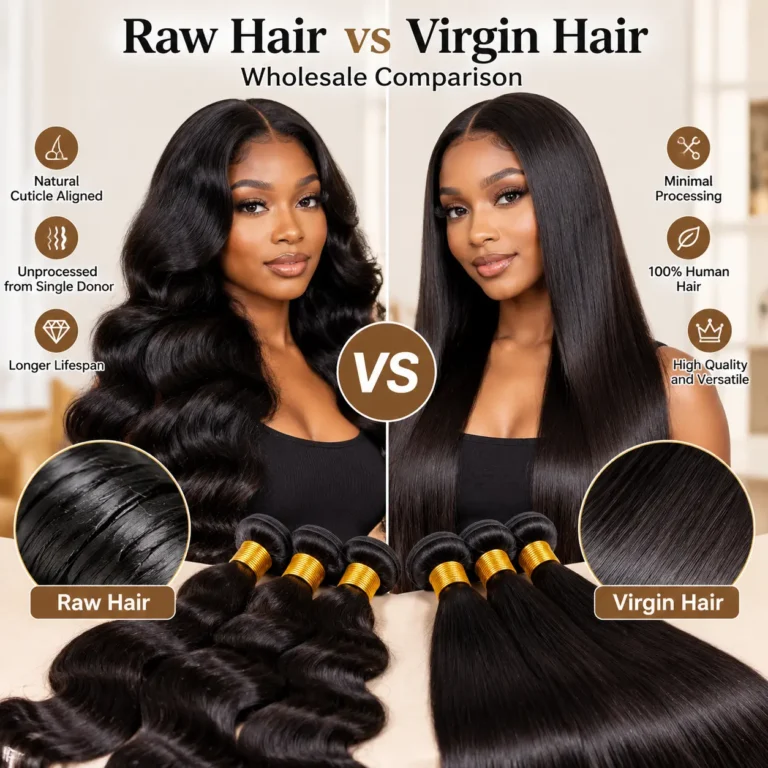
Virgin hair is generally described as hair that has not undergone chemical processing such as bleaching or dyeing before collection or preparation. However, supplier definitions can vary, so buyers should confirm the exact processing history and specifications.
Raw human hair
Raw hair is commonly marketed as minimally processed hair. Because industry terminology is not always standardized, ask the supplier how the hair is sourced, sorted, cleaned, and processed rather than assuming that the label alone guarantees quality.
Remy human hair
Remy hair generally refers to hair collected or processed to keep the cuticles aligned in the same direction. This can help reduce tangling when the hair is properly handled, but the result also depends on sourcing, processing, and manufacturing quality.
Synthetic hair
Synthetic wigs can be a practical choice for fashion-focused buyers and businesses serving customers with different budgets. When considering synthetic 13×6 styles, confirm the fiber type, heat-styling limitations, color options, and expected maintenance requirements.
What should you inspect?
Before placing a bulk order, request a sample and evaluate:
- Softness and texture: Check whether the hair feels consistent from root to tip.
- Tangling: Gently comb through the hair and observe whether knots form easily.
- Shedding: Check whether the hair remains secure during gentle brushing and handling.
- Color consistency: Confirm that the color matches the approved sample and order specification.
- Styling performance: For human hair, test styling only according to the supplier’s care guidance.
- Batch consistency: Ask how the factory controls hair grading and repeat orders.
A sample should represent the specifications you intend to purchase in bulk. If you plan to sell several hair grades or textures, test each important variation instead of assuming that one sample represents the entire product range.
For a broader sourcing strategy, buyers can also review our Wigs OEM & ODM manufacturing guide to understand how product specifications and manufacturing controls affect a custom wig order.
4. How to Select the Right Lace Type
Lace quality is another important consideration when buying 13×6 lace front wigs wholesale. It influences the appearance of the hairline, wearing comfort, installation experience, durability, and final product cost.


9
HD lace
HD lace is designed to be thin and blend naturally with the scalp when matched appropriately to the wearer’s skin tone and installed correctly. It is often selected for premium products where an inconspicuous hairline is a priority.
For wholesale buyers, the key questions are whether the lace is consistent across batches, how easily it tears during handling, and whether its appearance meets your customers’ expectations.
Transparent lace
Transparent lace can work well for a variety of skin tones, although the final appearance depends on the individual wearer, lace color, lighting, and installation technique.
It can be a useful option for businesses seeking a balance between natural appearance, product cost, and everyday usability.
Swiss lace and other standard lace options
Swiss lace and other conventional lace constructions may suit buyers who prioritize a balance of comfort, durability, and cost. Actual performance depends on the specific material, thickness, knotting, and workmanship.
A practical lace selection strategy
| Customer segment | Option to evaluate | What to prioritize |
|---|---|---|
| Premium wig boutiques | HD lace | Natural-looking hairline and fine lace construction |
| General wig retailers | Transparent lace | Appearance, fit, and price balance |
| Price-conscious wholesale markets | Suitable standard lace | Durability and consistent production quality |
| Salon professionals | Options based on customer needs | Installation experience and styling flexibility |
Do not select lace solely by its name. Request samples, examine the lace under normal lighting, and test its strength during careful handling.
When developing a private-label product, confirm the lace specification in writing and make it part of the approved sample standard.
5. Choosing the Right Hair Density, Length, and Texture
The same 13×6 lace construction can serve very different markets depending on its length, density, and texture. These specifications also affect production costs, shipping weight, product positioning, and inventory requirements.
Hair density
Hair density describes how full the wig appears. Buyers may encounter options such as 150%, 180%, or 200% density, but these percentages should be treated as supplier-specific specifications rather than a universal measurement standard.
Higher-density wigs can create a fuller appearance, but they may also require more hair and increase production costs. Excessive density is not necessarily an advantage for customers who prefer lightweight, natural-looking everyday styles.
Wholesale tip: Compare density using physical samples and confirm how the supplier defines and checks it. Do not compare quotations based on density percentages alone.
Hair length
Different lengths appeal to different customer preferences and price points.
- Shorter lengths: Can suit everyday styles, professional looks, and buyers seeking lower entry prices.
- Medium lengths: Offer flexibility for salons and online retailers serving a broad customer base.
- Longer lengths: Can support premium product positioning but usually require more material and careful handling.
When purchasing in bulk, confirm how the supplier measures hair length and whether the measurement method is consistent across straight and curly textures.
Popular textures to consider

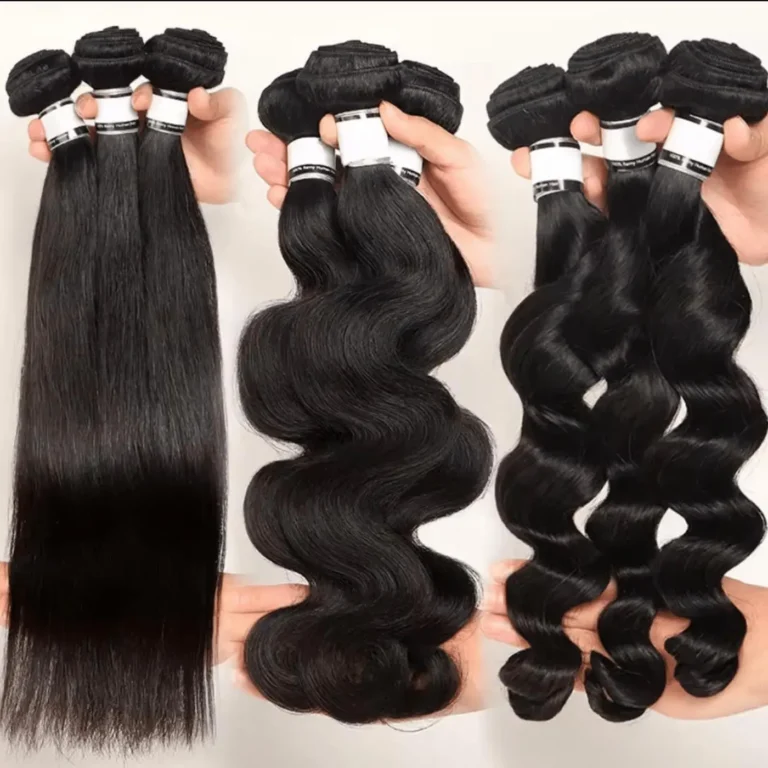
Straight
A versatile option for everyday and classic styles.

Body Wave
Suitable for customers seeking soft waves and flexible styling.

Deep Wave
Offers a more defined wave pattern and fuller visual effect.

Curly
An option for buyers serving customers who prefer textured styles.
Instead of ordering a large quantity of every possible combination, build your initial selection around a few core specifications. Add more lengths, densities, and textures after you identify which products generate repeat orders.
For distributors, a carefully planned assortment can reduce slow-moving inventory. For online sellers, it can also make product listings, photography, and stock management easier to maintain.
6. How Much Do 13×6 Lace Front Wigs Cost Wholesale?
There is no single wholesale price for a 13×6 lace front wig. The final quotation depends on the product specifications, order quantity, customization requirements, and shipping arrangements.
A supplier offering a lower price is not necessarily providing better value if the product requires more after-sales support or fails to meet your approved specifications.
Main factors affecting wholesale prices
| Cost factor | How it can affect your quotation |
|---|---|
| Hair material and grade | Different sourcing and processing requirements can produce significant cost differences. |
| Hair length | Longer hair generally requires more material. |
| Density | Fuller wigs may require additional hair and production work. |
| Lace type | Different lace materials and construction requirements affect cost. |
| Wig cap construction | Cap size, ventilation, and additional features can influence labor and material costs. |
| Order quantity | Larger orders may qualify for volume-based pricing, subject to the supplier’s terms. |
| Customization | Special colors, unique specifications, packaging, and branding can add costs. |
| Shipping and import charges | Freight, insurance, customs duties, and local handling affect the landed cost. |
Calculate your total landed cost
For business planning, consider the complete cost of getting each wig ready for sale:
Landed cost per unit = Product cost + Allocated shipping + Import and handling costs + Other applicable costs
For example, if a hypothetical order has a product cost of $40 per wig, allocated shipping of $5, and import and handling costs of $3 per unit, the estimated landed cost is $48 per wig.
This is an illustration, not a market quotation or a Dejun price. Actual costs vary by specification, destination, order size, and shipping method.
Your selling price should also account for packaging, payment processing, marketing, fulfillment, potential returns, and your desired profit margin.
How to obtain an accurate quotation
When contacting a 13×6 lace front wig supplier, provide the following information:
- Hair type and processing requirements.
- Lace type and color.
- Preferred length and density.
- Texture and color.
- Quantity per specification.
- Packaging and private-label requirements.
- Destination country and preferred shipping method.
The more complete your specifications are, the easier it is to compare quotations on an equivalent basis.
For buyers sourcing directly from a factory, it is also worth asking whether the quotation separates product cost, customization charges, and shipping expenses.
7. What MOQ Should You Expect When Buying Wholesale?
Minimum order quantity is one of the biggest concerns for new wig businesses. Ordering too much inventory can put pressure on cash flow, while ordering too little may limit access to wholesale pricing or customized production.
The appropriate MOQ depends on whether you are buying ready-stock products or requesting a new custom design.
Ready-stock orders
Ready-stock products are generally a practical starting point for buyers who want to test demand quickly. Depending on the supplier’s stock and ordering policy, buyers may be able to purchase smaller quantities or mix several available styles.
Before ordering, confirm stock availability by length, texture, density, lace specification, and color. A product being listed as available does not necessarily mean every variation is in stock.
Custom OEM/ODM orders
Custom production may involve additional requirements for materials, production setup, packaging, and quality approval. Consequently, the MOQ may differ from that of ready-stock products.
For example, a buyer developing a private-label 13×6 wig may need to confirm whether the minimum quantity applies per style, per color, per specification, or to the entire order.
Dejun offers OEM/ODM customization for wig businesses, including customized product specifications and private-label packaging. Buyers can discuss their target order quantities and requirements with the factory to determine a feasible arrangement.
Learn more about the available services in our Wigs OEM & ODM guide.
A lower-risk purchasing approach
For a new business, consider the following process:
- Start with a manageable quantity of available products.
- Test samples before committing to larger orders.
- Track sales by length, texture, and lace type.
- Reorder proven styles rather than expanding the assortment too quickly.
- Introduce custom colors or packaging after validating demand.
For established distributors, a mixed-style order may help diversify inventory, provided the supplier confirms that the requested combinations meet its order requirements.
Important: Do not assume that every custom order qualifies for the same MOQ as ready stock. Ask for written confirmation before making purchasing decisions.
8. How to Choose a Reliable 13×6 Lace Front Wig Supplier
A reliable supplier should do more than offer an attractive quotation. For overseas B2B buyers, consistent quality, clear communication, flexible order management, and dependable delivery are equally important.
Use the following checklist when evaluating a 13×6 lace front wig supplier.
1. Verify manufacturing capability
Ask whether the supplier is a direct manufacturer, a trading company, or a combination of both. A direct factory may offer more control over production specifications, sampling, and private-label development.
Review the factory’s production processes, including hair preparation, wig cap construction, lace sewing, styling, finishing, and final inspection.
2. Request a representative sample
A sample allows you to inspect the actual product before committing to a bulk order.
Check the hair texture, lace appearance, hairline, cap construction, sizing, and workmanship. If you intend to order several variations, request representative samples of the most important specifications.
Keep the approved sample and written product specifications as references for future production.
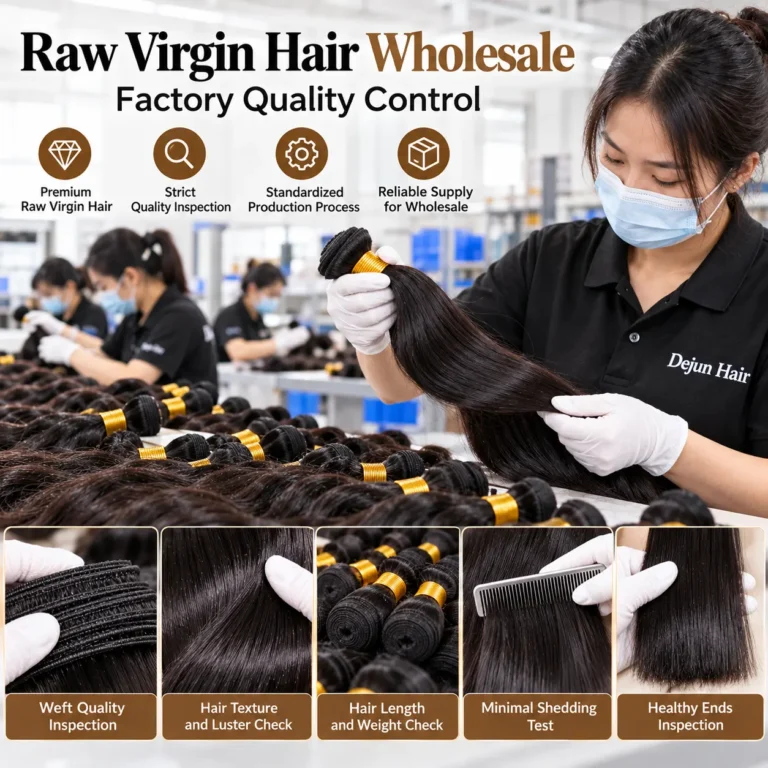
3. Ask about quality control
A professional supplier should explain how it checks product quality and handles defects.
For 13×6 lace front wigs, quality checks may include:
- Hair softness, tangling, and shedding.
- Lace condition and frontal construction.
- Hairline appearance and knot consistency.
- Cap measurements and adjustable features.
- Color, length, density, and texture consistency.
- Final appearance and packaging condition.
Agree on inspection criteria before mass production. For larger orders, consider arranging a pre-shipment inspection based on your requirements.
4. Compare MOQ and customization flexibility
Ask whether the supplier supports ready-stock purchasing, mixed-style orders, custom specifications, and private-label packaging.
A flexible supplier can help you test new products without committing too much capital too early, while also supporting larger orders as your business grows.
5. Confirm production lead time and delivery arrangements
Ask the supplier to distinguish between sample development time, mass-production lead time, and shipping transit time.
For international orders, confirm the shipping method, export documentation, consignee information, and any customs-related requirements applicable to your destination.
No supplier can eliminate every logistics risk, but clear documentation and realistic delivery planning can reduce avoidable delays.
6. Evaluate communication and after-sales support
Good communication matters when product specifications need adjustment or an order encounters a problem.
Before placing an order, clarify how defects are documented, what evidence is required, how replacement or refund requests are reviewed, and which party is responsible for applicable shipping costs.
For long-term cooperation, after-sales support should be part of the supplier evaluation rather than an issue addressed only after a problem occurs.
9. Why Work Directly With a Wig Manufacturer?
Working directly with a manufacturer can give wholesale buyers a more direct route to production, specification confirmation, and customization.
Dejun Wig Factory is based in Shaoyang, Hunan, China, and has approximately 20 years of manufacturing experience. Its production operations cover hair processing, wig cap construction, lace sewing, styling, quality inspection, and warehousing.
For buyers sourcing 13×6 lace front wigs wholesale, this manufacturing model offers several practical advantages.
Factory-direct purchasing
Communicating directly with the production team can simplify discussions about hair quality, lace specifications, product construction, and order requirements. Factory-direct sourcing can also reduce intermediary markups, although the final cost still depends on the product and order terms.
Human hair and synthetic product options
Different businesses serve different customer budgets. Dejun supplies both human hair and synthetic wig products, allowing buyers to discuss a product assortment that fits their target market.
OEM/ODM and private-label customization
Depending on the product and agreed specifications, buyers can discuss customization options such as hair length, density, lace material, cap size, colors, brand labels, and packaging.
Flexible sourcing for different business sizes
Small businesses may prefer to test ready-stock products before expanding, while established distributors may need larger quantities and repeat production. Discussing order requirements directly with the factory can help determine the most suitable purchasing arrangement.
Production-based quality control
A factory with integrated production processes can monitor quality at multiple stages rather than relying only on a final visual check. Buyers should still confirm the specific inspection procedures and acceptance standards applicable to their orders.
For businesses developing their own wig brands, explore Dejun’s OEM/ODM manufacturing services to understand the customization process and how to prepare a product brief.
10. How to Place Your First Bulk Order Successfully
Once you have selected a supplier, a structured ordering process can help prevent misunderstandings and unnecessary costs.
- Define your target marketIdentify whether you are selling through salons, physical wholesale stores, an independent website, or social commerce channels. Your customers’ preferences should guide your product specifications.
- Prepare a product specification sheetList the lace size, lace type, hair material, length, density, texture, color, cap size, and packaging requirements for each SKU.
- Request samples and a written quotationEvaluate the physical product and confirm pricing, MOQ, payment terms, production lead time, and shipping arrangements.
- Approve the sample before productionMake sure the approved sample matches the specifications in your order confirmation. Document any special requirements in writing.
- Confirm inspection and delivery requirementsAgree on how products will be checked, how defects will be handled, and which shipping documents are required.
- Review sales performance after deliveryTrack customer feedback, returns, and repeat purchases. Use this information to improve your next order instead of relying on assumptions.
This process is especially useful for first-time importers and businesses introducing a new private-label collection.
Frequently Asked Questions About 13×6 Lace Front Wigs Wholesale
Is a 13×6 lace front wig better than a 13×4 wig?
Not necessarily. A 13×6 wig provides deeper parting space, while a 13×4 wig may meet the needs of customers who prefer conventional styling at a different price point. The best choice depends on your customers’ preferences and the product’s overall quality.
Can I order 13×6 HD lace front wigs in bulk?
Yes, bulk orders can be arranged by suppliers that manufacture or stock this specification. Confirm the available lace type, hair material, MOQ, production schedule, and whether samples are available before placing your order.
What is the best hair density for wholesale 13×6 wigs?
There is no single best density for every market. Compare physical samples, check how the supplier defines its density specifications, and select options that match your target customers and selling price.
Can a wig factory customize 13×6 lace front wigs with my brand logo?
Many manufacturers offer private-label services, including logo labels, hangtags, packaging, and customized product specifications. Confirm which services are available for your selected model and whether additional MOQs or setup costs apply.
How can I reduce the risk of a poor-quality bulk order?
Request samples, document the specifications, confirm inspection standards, and agree on defect-handling procedures before production. For larger orders, consider an independent pre-shipment inspection.
What information should I provide to get a wholesale quotation?
Provide your preferred hair material, lace type, length, density, texture, color, quantity, packaging requirements, and destination country. These details help the supplier prepare a more relevant quotation.
Conclusion: Find the Right 13×6 Lace Front Wigs Wholesale Partner
Buying 13×6 lace front wigs wholesale successfully requires more than finding the lowest unit price. You need to select the right hair material, compare lace quality, choose appropriate lengths and densities, understand MOQ requirements, and verify that your supplier can maintain consistent product specifications.
For new businesses, starting with samples and a manageable order can help validate demand before investing in larger quantities. For established wholesalers, a clear specification sheet, agreed inspection standards, and a reliable production partner can support more predictable repeat orders.
Dejun Wig Factory provides human hair and synthetic wig manufacturing, wholesale supply, and OEM/ODM customization for international wig businesses. Whether you are building a new brand, stocking a salon, or expanding a distribution network, the first step is to define your product requirements and discuss a suitable sourcing plan.
Ready to source 13×6 lace front wigs wholesale?
Contact Dejun to discuss your preferred hair quality, lace type, length, density, order quantity, and private-label requirements. Request a sample or quotation to evaluate the product before committing to a bulk order.
A well-planned sourcing decision can help you control purchasing costs, maintain product consistency, and build a stronger foundation for long-term growth.
High Quality
All of our products have undergone production and quality control and come with certificates
Fast Delivery
Our supply chain management is a model of standardization and professionalism in the wig manufacturing industry, ensuring that our customers receive their wigs on time.
Customer Service
Fill out the wig order form to customize your base, size, hair length, and color.