
Leave your Message

-
Yongqi Chen sales consultant
-
Phone/WhatsApp: +86 13187012919

How to Sell Wholesale Lace Front Wigs: Best-Selling Styles, Pricing & Inventory Tips for Wig Businesses
Table Of Contents
- What Makes a Lace Front Wig a Good Product to Sell?
- Best-Selling Lace Front Wigs: Start With Core Styles
- 13×4 vs. 13×6 Lace Front Wigs: Which Should You Sell?
- Human Hair vs. Synthetic: Serve More Than One Price Segment
- Do Not Overstock Fashion Colors and Unusual Specifications
- How to Price Lace Front Wigs for Your Business
- Build a Three-Level Lace Front Wig Inventory
- Match Your Inventory to Different Customer Types
- Use Sales Data to Decide What to Reorder
- Low MOQ and Mixed Orders Can Improve Inventory Efficiency
- When Should You Move From Stock Wigs to Private Label?
- Your Supplier Is Part of Your Inventory Strategy
- Common Lace Front Wig Inventory Mistakes
- Final Thoughts: Sell Better Before You Stock More
For a wig business, buying lace front wigs is only the first step. The bigger challenge is deciding which styles deserve more inventory, how much stock to hold, how to price different product levels, and when to reorder.
A style that looks attractive in a supplier catalog does not automatically deserve a large purchase. Some products work better as reliable everyday sellers, while others are better suited to small-batch testing, seasonal promotions, or premium customers. When too much capital is tied up in slow-moving lengths, colors, or lace specifications, even a healthy sales business can experience inventory pressure.
For salons, wholesalers, beauty stores, and online sellers already sourcing wholesale lace front wigs, a better strategy is to treat inventory as a portfolio rather than a collection of individual styles.
This guide explains how to build that portfolio—from choosing the best-selling lace front wigs and serving different customer groups to setting resale prices, controlling inventory, and developing a more reliable replenishment strategy.
What Makes a Lace Front Wig a Good Product to Sell?
There is no single “best” lace front wig for every market.
A salon serving customers who prioritize realistic hairlines may require a different assortment from a distributor supplying price-sensitive retailers. Likewise, an Instagram or TikTok seller can test fashion colors more quickly than a traditional wholesaler carrying inventory for several months.
Before increasing an order, evaluate a lace front wig across four areas:
- Demand: Are customers repeatedly asking for the texture, length, color, and lace construction?
- Margin: Is there enough room between your landed cost and realistic selling price?
- Turnover: How quickly does the SKU sell compared with other products?
- Repeatability: Can your supplier reproduce the same quality when you reorder?
The last point is particularly important for human hair lace front wigs wholesale. A popular SKU loses much of its value if the next shipment has noticeably different hair texture, density, color, lace, or cap construction.
The goal is therefore not to stock the largest possible collection. It is to identify products that can be sold and replenished consistently.
Best-Selling Lace Front Wigs: Start With Core Styles
For most established wig businesses, inventory planning should begin with dependable products rather than trend-driven styles.
Although demand varies by country and customer segment, several categories are practical candidates for a core lace wig assortment.
Straight Lace Front Wigs
Straight lace front wigs are useful foundation products because they are easy for customers to understand and can serve multiple styling preferences.
For a wholesale assortment, you can test combinations of:
- Natural black and 1B colors
- Short, medium, and long lengths
- 13×4 and 13×6 lace areas
- Transparent and HD lace
- Standard and higher-density options
- Regular and glueless cap constructions
However, avoid turning every possible combination into a permanent SKU.
For example, if your sales records show that medium lengths in natural black account for most repeat purchases, those specifications deserve deeper inventory than an uncommon long length in a specialty color.
Your actual sales data should determine inventory depth.
Body Wave Lace Front Wigs
Body wave is another versatile category for businesses selling human hair lace front wigs.
The texture provides a styled appearance while allowing quality human hair products to be restyled according to appropriate care instructions. This makes body wave useful for salons, online wig brands, beauty stores, and distributors serving customers with different styling preferences.
When evaluating body wave products, consistency matters. Compare samples and repeat orders for curl pattern, hair fullness, ends, shedding, and how well the texture performs after washing.
A low wholesale price means little if customers complain that one shipment behaves differently from the previous one.
Glueless Lace Front Wigs
Convenience has become an important selling point in the wig category, making glueless constructions useful additions to many inventories.
A glueless wig may incorporate features such as adjustable straps, elastic bands, pre-plucked hairlines, pre-cut lace, or other cap adjustments intended to simplify installation.
For sellers, however, the term “glueless” should not be treated as a complete specification.
Before buying in volume, check:
- Cap construction
- Adjustment range
- Lace dimensions
- Hairline preparation
- Cap size
- Security and fit
- Whether the lace is pre-cut
- Density and hair distribution
Two suppliers can both describe a product as a “glueless lace front wig” while delivering noticeably different constructions. Detailed specifications make repeat ordering much safer.
Bob Lace Front Wigs
Bob wigs can fill an important short-length position in a lace wig assortment.
Straight bobs, blunt cuts, side parts, middle parts, and highlighted versions give sellers multiple ways to serve customers who prefer shorter styles. They also allow a business to diversify its range without relying entirely on long wigs.
If short hairstyles already perform well in your market, compare your lace front sales with your Bob Wigs Wholesale category and determine whether dedicated bob inventory deserves a larger share of your purchasing budget.
Rather than stocking every length, test a focused range and increase quantities according to sell-through.
HD Lace Front Wigs
For businesses serving customers who place greater emphasis on the appearance of the hairline, HD lace front wigs can provide a premium tier above basic lace options.
The sales conversation should not simply be “HD lace is better.” Instead, explain the trade-off.
Thinner lace can create a less visible appearance when properly matched and installed, but delicate lace generally requires more careful handling. Your staff and customers should understand both the aesthetic benefit and the care requirements.
An HD Lace Front Wig collection therefore works best when it is matched with customers willing to pay for the feature and care for the product appropriately.
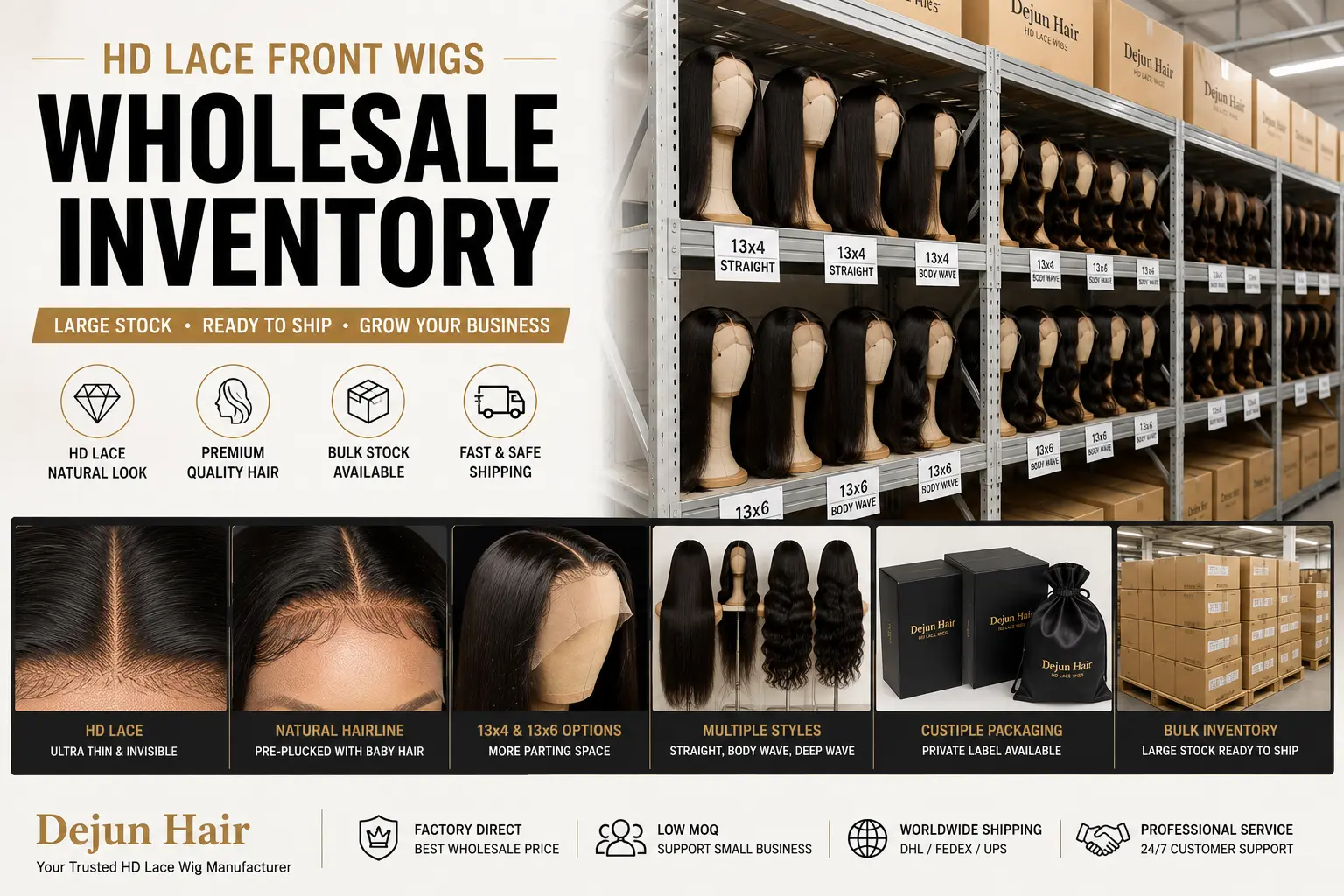
13×4 vs. 13×6 Lace Front Wigs: Which Should You Sell?
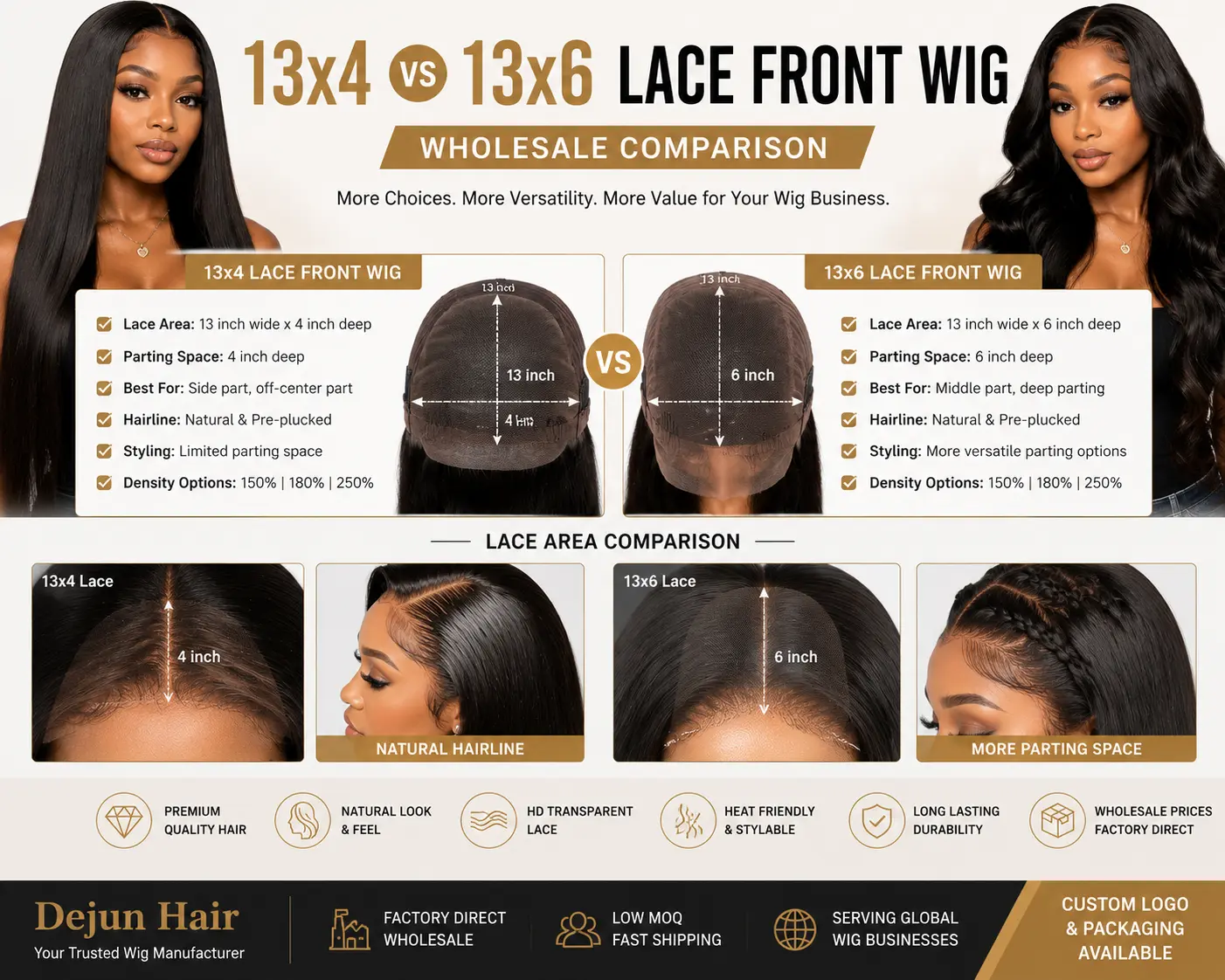
Lace dimensions affect both product cost and the customer’s styling possibilities.
A 13×4 lace front construction provides frontal lace coverage while generally keeping the product at a more accessible cost level. This makes it practical for core inventory in many businesses.
A 13×6 lace front wig provides greater lace depth, which can offer additional parting flexibility. It can therefore occupy a higher product tier for customers who value more styling space.
A simple inventory structure could look like this:
| Lace Construction | Typical Position | Inventory Role |
|---|---|---|
| 13×4 Lace Front | Entry to mid-range | Core stock |
| 13×6 Lace Front | Mid to premium | Core + premium stock |
| Full Lace | Premium | Targeted inventory |
Full lace constructions offer substantially more lace coverage and styling possibilities, but that does not mean every business should hold large quantities.
If your customers specifically value greater styling flexibility, consider maintaining a smaller Full Lace Wigs Wholesale assortment alongside your core lace front inventory.
The key is matching construction to customer demand—not assuming that a more expensive specification will automatically sell better.
Human Hair vs. Synthetic: Serve More Than One Price Segment
Another way to structure a wig business is by customer budget.
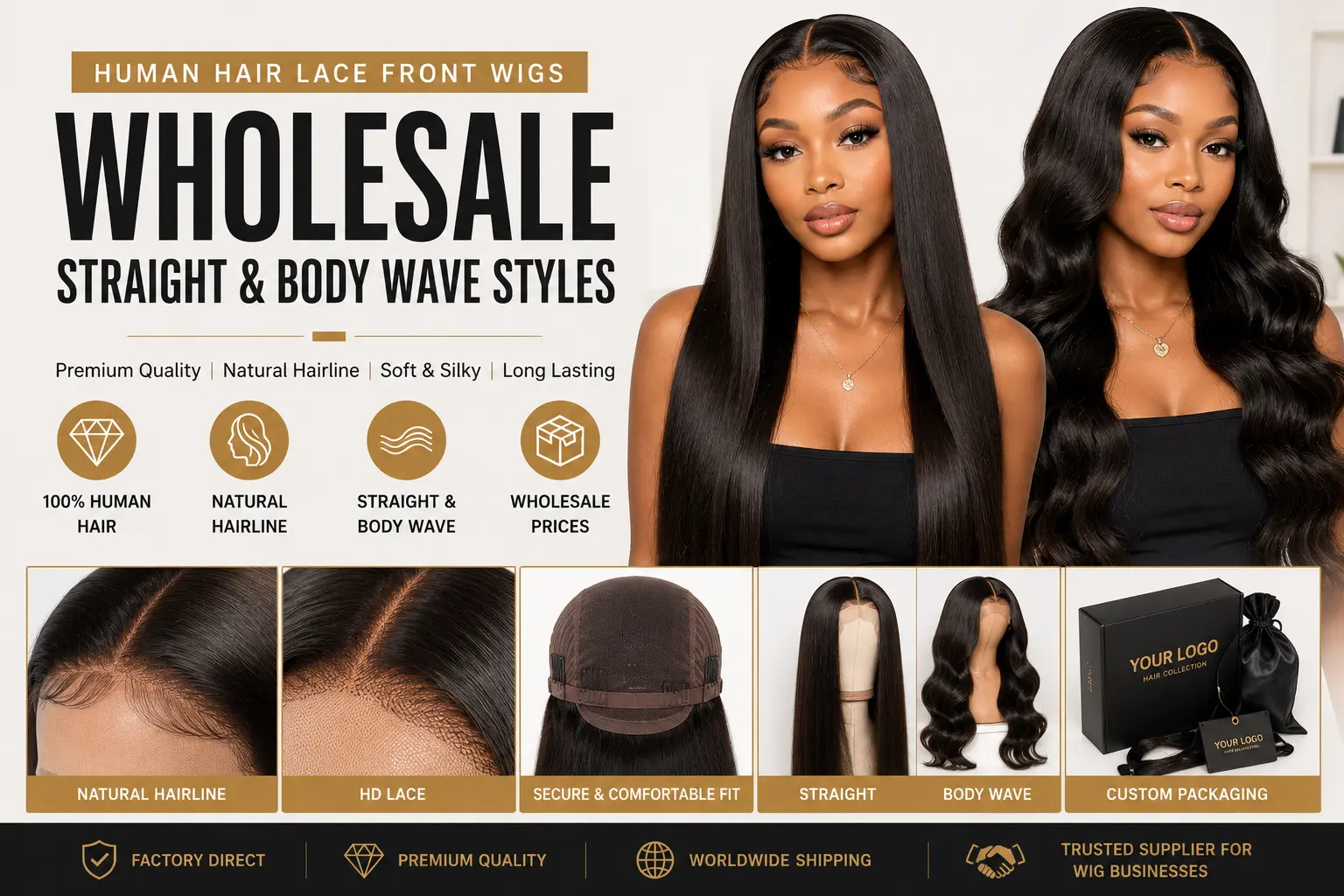
Human Hair Lace Front Wigs
Human hair wigs are generally positioned toward customers looking for a more natural feel, styling flexibility, and longer-term use when the product is properly maintained.
But “human hair” alone does not define quality.
When purchasing human hair wigs wholesale, evaluate factors such as:
- Hair source and grading consistency
- Cuticle condition
- Chemical processing
- Short-hair content
- Shedding
- Tangling
- Fullness at the ends
- Color consistency
- Performance after washing
For repeat wholesale orders, consistency is often more commercially valuable than impressive terminology.
At Dejun, for example, human hair raw materials are separated and controlled according to quality requirements rather than treating every human hair product as identical. This allows different product levels to be developed for different wholesale markets.
Synthetic Lace Front Wigs
Synthetic products can serve another important part of the market.
They can be useful for:
- Entry-level price points
- Fashion colors
- Promotional products
- Trend testing
- Customers who frequently change styles
- Retailers serving price-sensitive markets
A business selling premium human hair does not necessarily need to ignore synthetic products. The two categories can serve different customers.
If your market contains both segments, a Wholesale Synthetic Lace Front Wigs range can help create a broader pricing ladder without forcing you to reduce the specifications of your human hair collection.
Do Not Overstock Fashion Colors and Unusual Specifications
One of the easiest ways to create dead inventory is to confuse social-media attention with stable demand.
A bright color, very long wig, or unusual texture may generate excellent engagement online. That does not necessarily mean customers will purchase it repeatedly.
Products such as:
- #613 blonde
- Burgundy
- Ombre
- Piano colors
- Highlight wigs
- Very long lengths
- Unusual densities
can be valuable differentiation products, but they should normally be tested against real customer demand before becoming deep-stock SKUs.
Instead of purchasing 50 units of one new color, for example, a seller could test several specifications in smaller quantities, measure sales, and then reorder the winner.
This is where an affordable lace front wigs wholesale strategy should focus on purchasing flexibility rather than simply chasing the lowest unit price.
A slightly lower factory price does not help if you must purchase far more inventory than your market can absorb.
How to Price Lace Front Wigs for Your Business
Pricing a wig by applying a fixed percentage to the supplier quote can create misleading margins.
Your factory purchase price is only one part of your real cost.
Calculate Your Landed Cost First
A more useful starting formula is:
Landed Cost = Product Cost + Freight + Import/Customs Costs + Packaging + Payment Costs + Other Direct Purchasing Costs
If you import wigs internationally, freight can significantly affect the economics of different order sizes.
After landed cost, consider operating expenses such as:
- Advertising
- Influencer commissions
- Website and marketplace fees
- Payment processing
- Fulfillment
- Store or salon expenses
- Customer support
- Returns and replacements
Only then can you evaluate the margin available at your intended selling price.
Different Products Do Not Need the Same Markup
A basic 13×4 wig and a premium HD lace wig do not necessarily need identical pricing logic.
Your final price should reflect:
hair quality + lace + length + density + construction + landed cost + operating cost + brand positioning + customer willingness to pay
For example, a premium product may generate a larger gross profit per unit but sell more slowly. A basic product may produce a smaller margin per piece but turn over much faster.
Both can be profitable.
The correct question is not:
“Which wig has the highest margin?”
It is:
“Which combination of margin and inventory turnover generates the healthiest return for my business?”
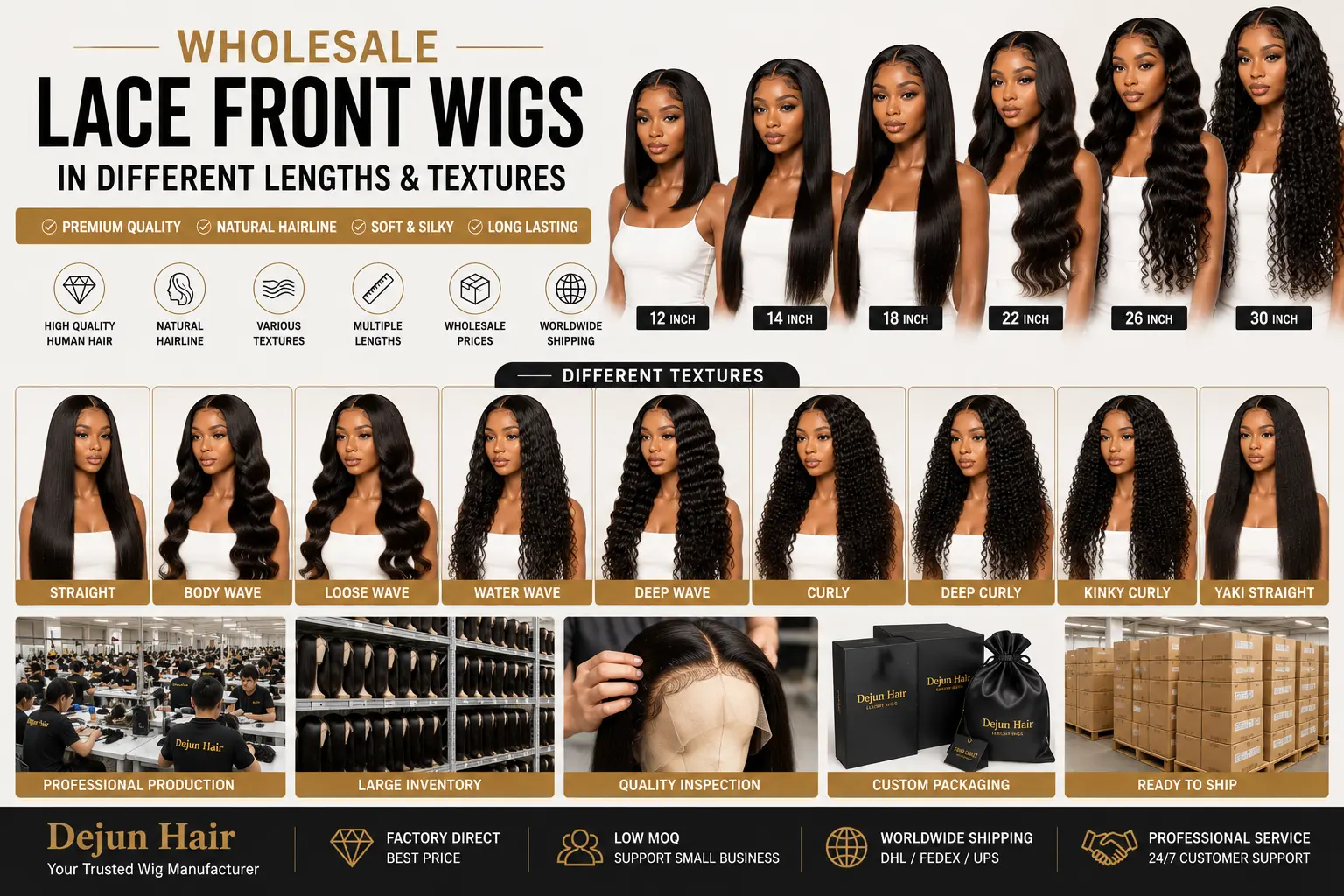
Build a Three-Level Lace Front Wig Inventory
Once you have sales history, you can divide your inventory into three practical groups.
1. Core Inventory
This should contain the products that repeatedly generate sales.
Depending on your market, examples could include:
- Natural black
- Straight
- Body wave
- Common lengths
- 13×4 constructions
- Popular density levels
- Basic glueless styles
These SKUs deserve the deepest inventory and fastest replenishment.
2. Growth Inventory
These products have demonstrated potential but may not yet justify the same inventory depth as your core collection.
Examples might include:
- 13×6 lace wigs
- HD lace
- Higher densities
- Premium human hair
- Highlight wigs
- Additional textures
Increase these SKUs as sales evidence becomes stronger.
3. Test Inventory
Use a smaller portion of your purchasing budget to experiment with:
- New colors
- Trending styles
- New cap constructions
- Seasonal products
- Unusual lengths
- New textures
There is no universal percentage that every wig business should follow. A mature wholesaler with years of sales data can operate differently from a TikTok seller testing a new audience.
The principle is more important than a fixed ratio:
Buy proven products deeper and uncertain products shallower.
Match Your Inventory to Different Customer Types
The best lace front wigs to sell also depend on who buys from you.
For Salon Customers
Salon customers may care more about:
- Consistent human hair quality
- Reliable lace
- Styling flexibility
- Repeat availability
- Natural colors
- Products that stylists already understand
Consistency between batches is particularly important because professional stylists quickly notice product changes.
For Wholesale and Distribution Customers
Distributors often need:
- Competitive volume pricing
- Stable supply
- Multiple lengths
- Mixed styles
- Predictable specifications
- Fast replenishment
For these buyers, a supplier’s production and inventory capacity can be as important as having a large catalog.
For E-Commerce and Social Media Sellers
Online sellers can often test trends faster.
They may benefit from:
- Glueless designs
- Pre-styled wigs
- Highlight colors
- Fashion textures
- Premium HD lace
- Private-label packaging
- Small mixed orders for content testing
This is one reason the ideal lace front wigs for wig business strategy should be built around the sales channel rather than copied from another retailer.
Use Sales Data to Decide What to Reorder
Your reorder decisions should become less subjective as your business grows.
Track each major SKU using metrics such as:
- Units sold
- Sales revenue
- Gross margin
- Sell-through rate
- Average selling time
- Return rate
- Customer complaints
- Repeat-order frequency
- Current stock
- Supplier lead time
Imagine Product A sells 100 units but generates frequent complaints and returns, while Product B sells 80 units with a better margin and very few problems.
Product A may appear to be the “best seller,” but Product B could be the better business.
Quality data should therefore sit next to sales data.
For wholesale businesses, supplier lead time should also influence your reorder point. If a popular product requires several weeks to manufacture and ship, waiting until only a few pieces remain can create a stockout.
Low MOQ and Mixed Orders Can Improve Inventory Efficiency
MOQ is not only a concern for new businesses.
Even established sellers benefit from flexible purchasing when testing new SKUs.
Suppose you want to evaluate:
- Two new colors
- Three lengths
- A new glueless cap
- HD and transparent lace
- Two densities
A high MOQ for every individual specification can quickly create a much larger order than you need.
A supplier that supports mixed-SKU purchasing allows you to test demand with less inventory exposure and move larger quantities into production only after you identify successful products.
At Dejun, stock products can support flexible wholesale combinations, while customized MOQ can be discussed according to the product and customization requirements. This is particularly useful for businesses that want to expand their assortment without committing heavily to every new style.
When Should You Move From Stock Wigs to Private Label?
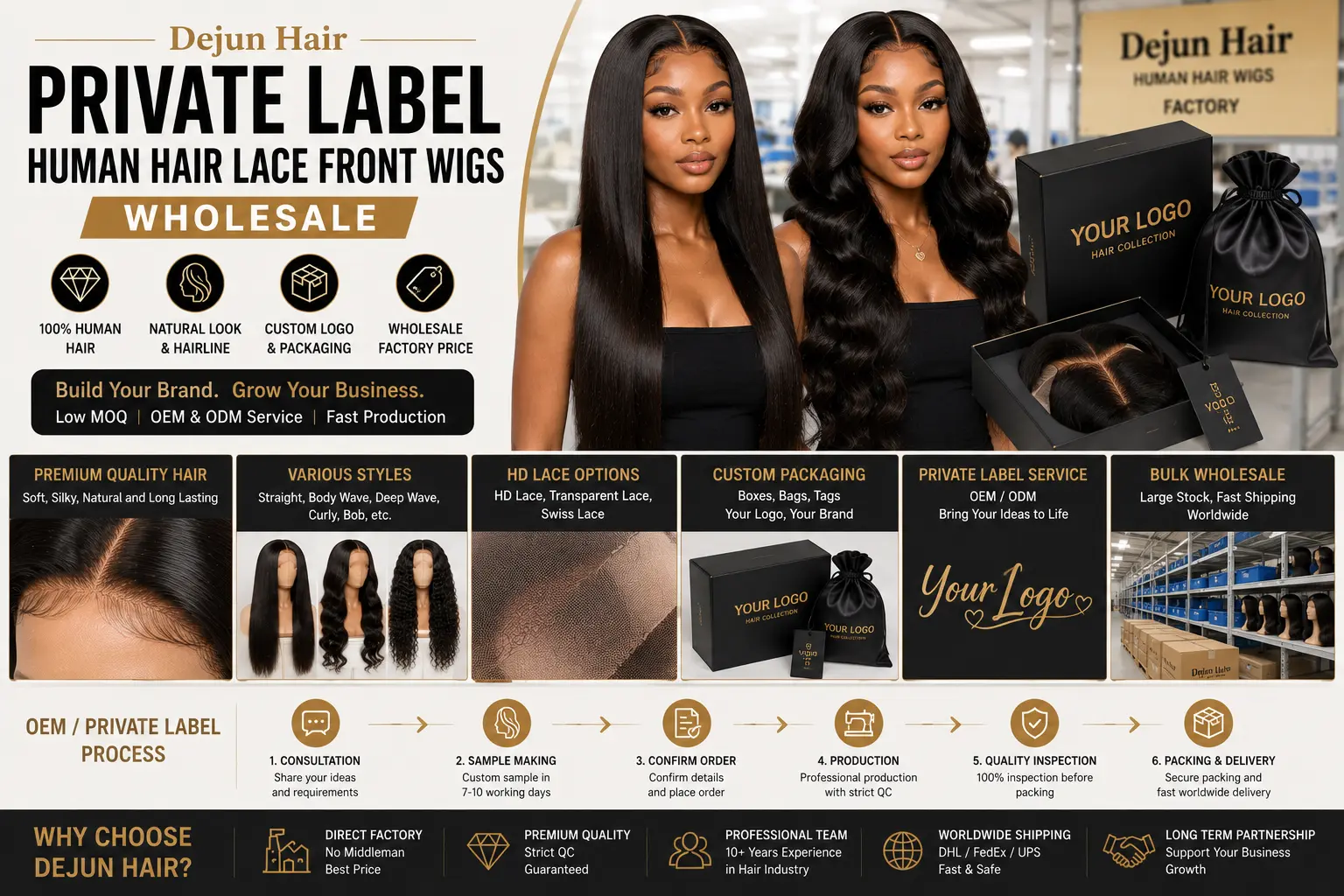
Private labeling makes more sense after you understand what your customers repeatedly buy.
If one of your best-selling lace front wigs has established stable demand, customization can help transform it from a generic product into a recognizable part of your brand.
Depending on the project, customization may include:
- Logo and packaging
- Hang tags
- Cap size
- Lace material
- Lace dimensions
- Density
- Length
- Color
- Texture
- Hairline preparation
- Product styling
Working with a Custom Wig Manufacturer can also allow successful sellers to develop variations around proven products.
For example, if a 20-inch body wave glueless wig is already selling well, you might test an upgraded lace option, custom packaging, or another density before developing an entirely unrelated product.
This approach makes OEM development data-driven rather than speculative.
Your Supplier Is Part of Your Inventory Strategy
Inventory management does not end inside your warehouse.
Your supplier affects how much safety stock you need to carry.
Consider two suppliers.
Supplier A offers a slightly cheaper unit price but has inconsistent production times and frequent specification changes.
Supplier B costs slightly more but can maintain specifications and provide predictable replenishment.
Supplier A may appear cheaper on the quotation sheet. But if you compensate for unreliable supply by holding significantly more inventory—or lose sales because a best seller cannot be replenished—the real cost can be higher.
For this reason, businesses purchasing wholesale wigs should evaluate:
- Product consistency
- Available stock
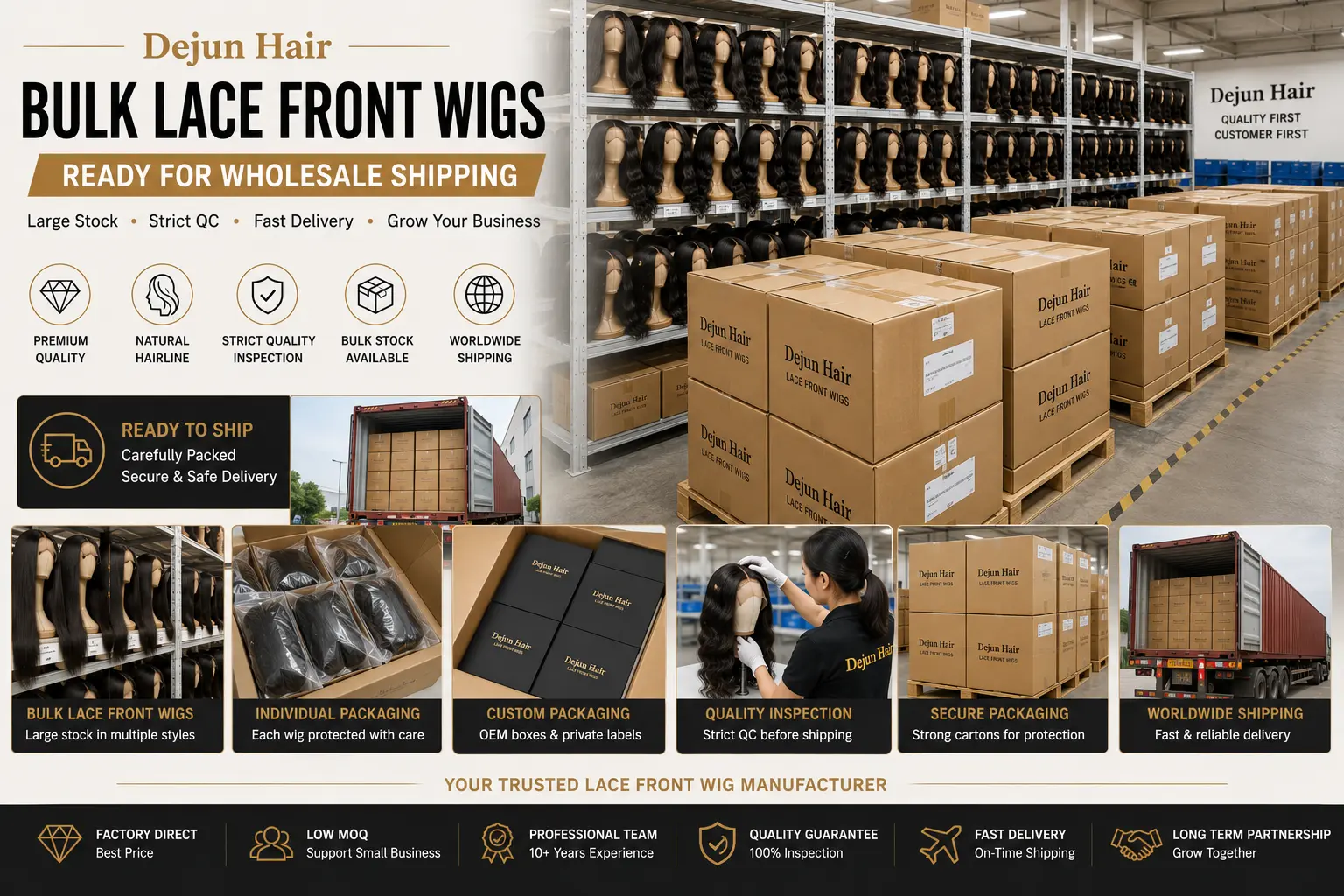
- Production capacity
- MOQ flexibility
- Mixed-order capability
- Lead times
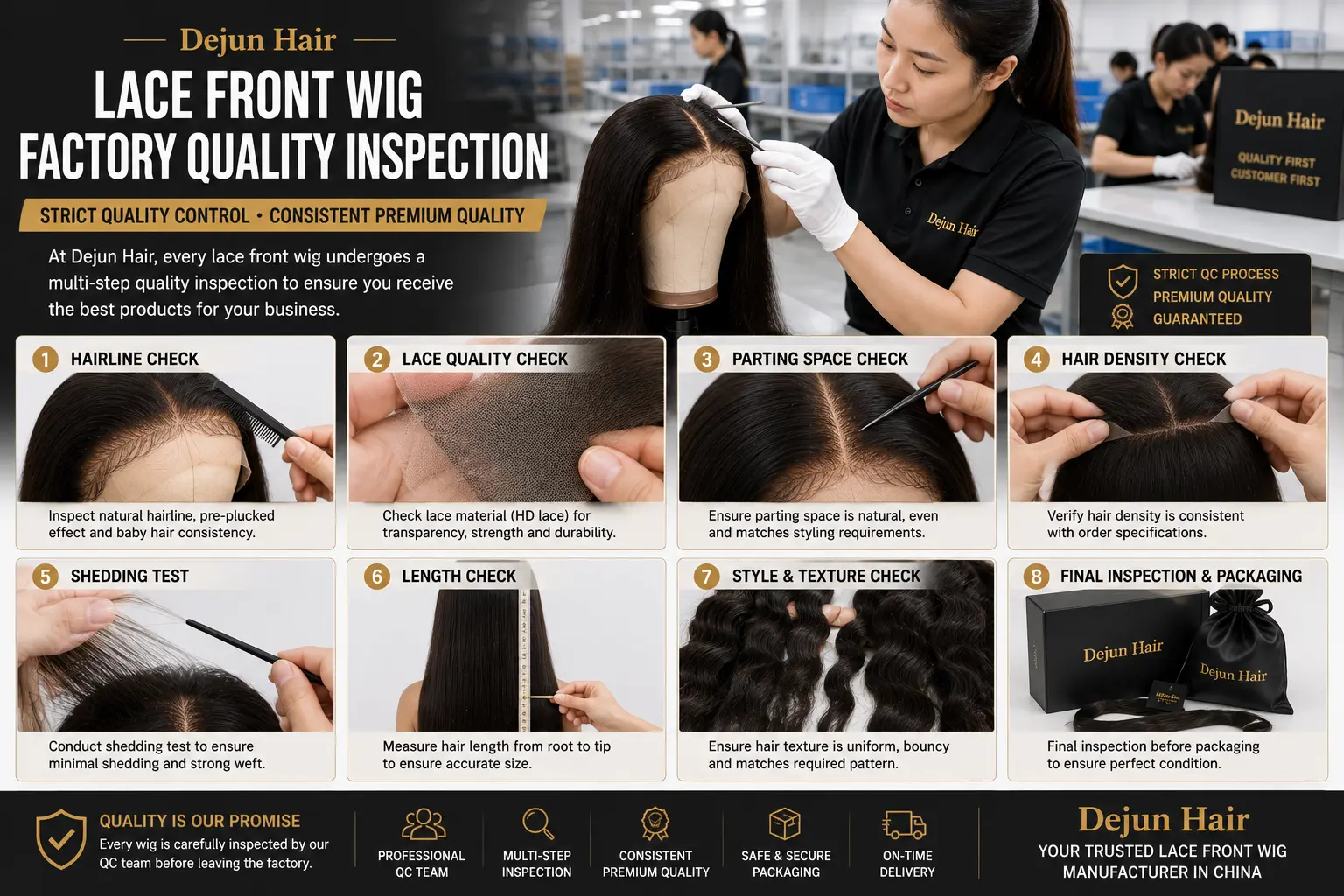
- Quality control
- Defect handling
- OEM capability
- Export and logistics experience
Dejun has operated as a wig manufacturer in Shaoyang, Hunan for approximately 20 years, with production processes covering hair preparation, cap construction, lace sewing, styling, inspection, and warehousing. For overseas wholesale customers, this integrated manufacturing structure helps us control product specifications and coordinate both stock replenishment and customized production.
Common Lace Front Wig Inventory Mistakes
Even experienced sellers can lose margin through inventory decisions.
One common mistake is carrying too many nearly identical SKUs. If customers see little meaningful difference between several products, sales become fragmented across inventory that could have been concentrated into fewer proven specifications.
Another is ordering heavily based on trends before testing actual conversion.
Businesses should also avoid:
- Selecting products based only on factory price
- Reordering without reviewing return data
- Holding excessive slow-moving colors
- Ignoring supplier production lead time
- Changing suppliers frequently for small price differences
- Failing to standardize product specifications
- Scaling a product before sample and market testing
- Treating every length as equally important
Inventory should become more focused as your sales data improves, not more complicated.
Final Thoughts: Sell Better Before You Stock More
Growing a lace front wig business does not always require adding more products.
In many cases, the better strategy is to understand which products already work and make your purchasing system more efficient around them.
Build your core inventory around repeatable demand. Use smaller orders to test new styles. Calculate landed cost before setting prices. Track margins together with sell-through and returns. And when a SKU becomes a consistent winner, make sure your supplier can reproduce it and replenish it reliably.
For businesses sourcing wholesale lace front wigs, long-term profitability ultimately depends on the combination of:
Product Demand + Quality Consistency + Margin + Inventory Turnover + Replenishment Reliability
A stable supply chain allows you to spend less time solving stock and quality problems—and more time selling the products your customers actually want.
If you are expanding or replenishing your lace front wig collection, Dejun can support stock wholesale, mixed-style orders, sample evaluation, bulk production, and OEM/private-label development. Contact our team with the styles, lengths, lace specifications, and approximate quantities you need to discuss a wholesale solution for your market.
Industry reference resources related to wholesale wig manufacturing :
https://wealthyhair.com/the-ultimate-guide-to-buying-wholesale-lace-front-wigs?srsltid=AfmBOop5QGad2xStaRiAWBuJHv6ZxUIhI9l5lBUeOb0Q_LuXnyu5kPlY

High Quality
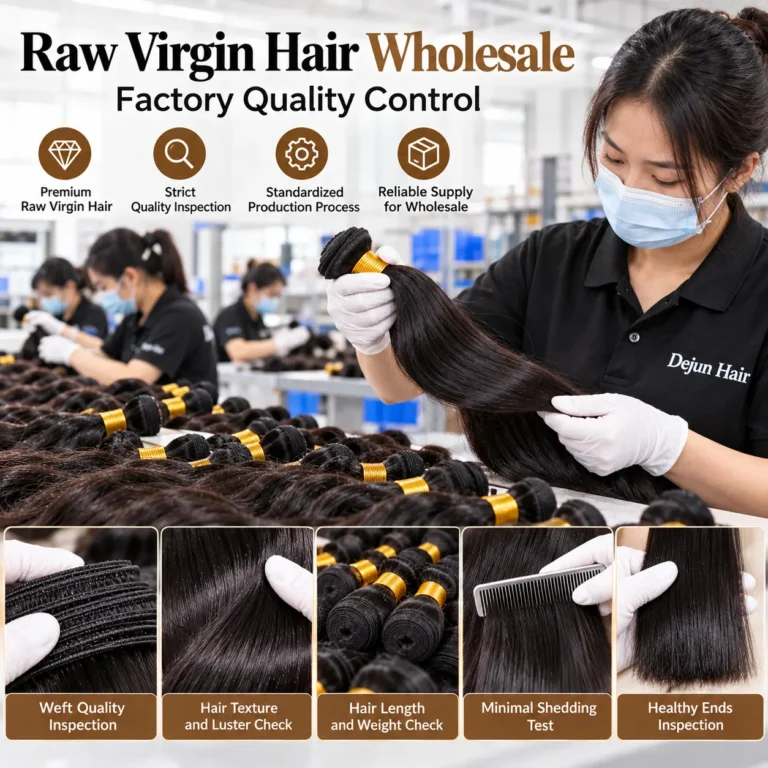
All of our products have undergone production and quality control and come with certificates
Fast Delivery
Our supply chain management is a model of standardization and professionalism in the wig manufacturing industry, ensuring that our customers receive their wigs on time.
Customer Service
Fill out the wig order form to customize your base, size, hair length, and color.