
Leave your Message

-
Yongqi Chen sales consultant
-
Phone/WhatsApp: +86 13187012919
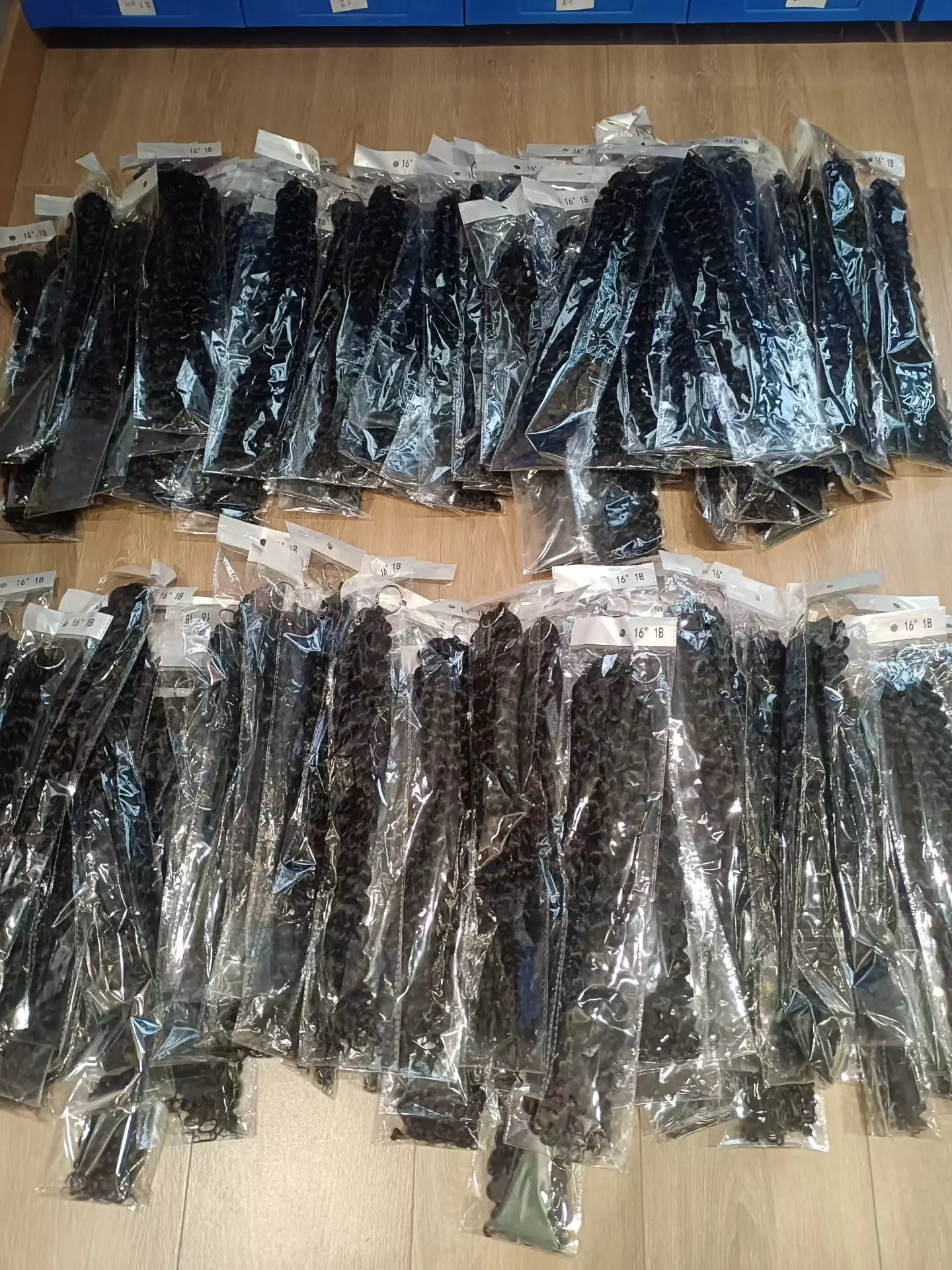
The Ultimate Wholesale Human Hair Wigs Sourcing Guide for Salons & Resellers
Table Of Contents
- Introduction
- Breaking Down the Core Concepts of Wholesale Human Hair Wigs
- Wholesale Human Hair Wigs: Two Common Questions and Answers
- Benefits of Following This Process for Purchasing Wigs
- Detailed Step-by-Step Guide to Wholesale Human Hair Wigs
- Wholesale Human Hair Wigs Case Studies
- About Dejun: Your Wholesale Human Hair Wigs Partner
Introduction
If you run a salon, wig retail store, or online beauty supply business, finding a reliable wholesale supplier of human hair wigs is one of the most critical decisions you’ll make. The quality of the products you offer directly impacts your reputation, customer retention, and ultimately, your profits.
This Wholesale Human Hair Wigs Sourcing Guide is specifically designed for salons and resellers to help you move beyond guesswork and establish a professional, repeatable sourcing process. Whether you’re purchasing bulk human hair wigs for the first time or looking to upgrade your existing supply chain, this guide will walk you through every step—from hair grades and supplier screening to quality testing and scaling up your order volume.
After reading this guide, you’ll have a clear roadmap for sourcing wholesale wigs for salons that meet quality standards, satisfy your customers’ needs, and maximize your profit margins.
Breaking Down the Core Concepts of Wholesale Human Hair Wigs
Before contacting any human hair wig manufacturer, it’s essential to understand the key terminology and product specifications in the wholesale wig industry. These concepts will form the foundation of every conversation with potential suppliers and help you avoid costly misunderstandings.
1.1 Hair Grades: Raw Hair, Virgin Hair, and Remy Hair
The first question any wholesale human hair wigs buyer should ask is: What grade of hair am I purchasing?
Within the industry, human hair is generally classified into three grades:
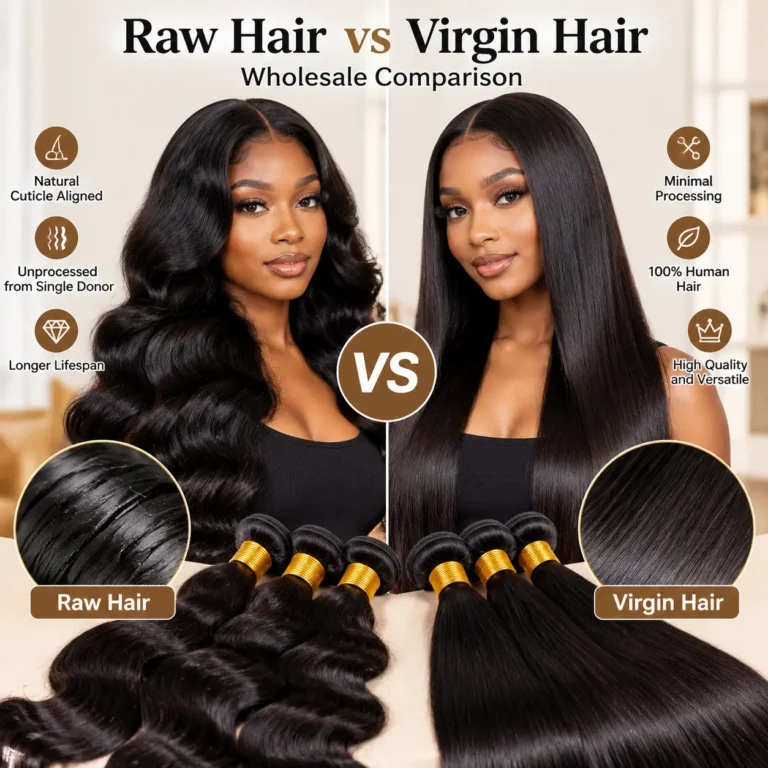
· Raw Hair: 100% chemically untreated human hair that has never been dyed, permed, or subjected to any chemical processing. The cuticles are intact and aligned in the same direction. Raw Hair can be bleached to platinum blonde with minimal damage to the hair structure; it is the highest grade and is typically used by top-tier human hair wig suppliers for their high-end product lines.
· Virgin Hair: Virgin Hair retains the aligned cuticle structure but has typically undergone mild steam straightening to unify the texture. While it can still be dyed and styled, its malleability is slightly lower than that of Raw Hair. Many wholesale wigs for salons fall into this category because it strikes a good balance between quality and price.
· Remy Hair: Remy Hair refers to hair with cuticles aligned in the same direction to prevent tangling. However, Remy Hair may have been dyed, permed, or otherwise processed; while its quality is lower than that of Virgin Hair, it is still suitable for everyday wear.
What does this mean for you as a wig buyer?
If your target customers are salon clients who expect wigs to be durable and heat-styleable, you should prioritize Virgin or Raw Hair. If you serve retail customers on a limited budget, Remy Hair may be sufficient. The key is to understand Human Hair Wig Quality Grades so you can accurately describe your products to downstream buyers.
1.2 Hair Origins: Where the Hair Comes From
The origin of the hair significantly affects its texture, durability, and market appeal. The three most common sources for bulk human hair wigs are:
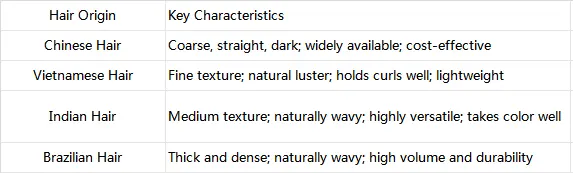
When reviewing the Human Hair Wigs Wholesale Price List, you’ll notice significant price differences based on country of origin. Hair from Vietnam and Brazil is typically more expensive, while hair from China and India offers better value for money. The best choice depends on your target market and price positioning.
1.3 Cap Construction
The cap is the foundation of a wig, and different constructions cater to different customer needs. As a buyer of wholesale wigs for salons, you should stock different cap types to meet diverse customer preferences:
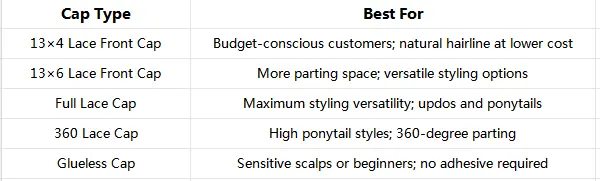
When communicating with your human hair wig supplier, be sure to clearly specify the cap construction type and lace quality (HD Lace / Swiss Lace / Transparent Lace) to ensure you receive products that meet your expectations.
1.4 Types of Suppliers in the B2B Wig Market
Not all suppliers are the same. Understanding the different types below will help you choose the right partner for your business:
1. Domestic Distributors: Hold inventory in the target market (e.g., the U.S.). Fast delivery and low MOQs, but higher unit prices and limited customization options.
2. Direct Overseas Manufacturers: Factories located in China, Vietnam, or India that produce wigs in-house. They offer the best prices and support OEM/ODM, but have longer lead times and higher MOQs.
3. OEM/ODM Contract Manufacturers: Produce wigs according to your brand specifications. If you’re building a private-label wholesale wig business, this is your preferred partner type.
Wholesale Human Hair Wigs: Two Common Questions and Answers
Q1: How can you verify that the “Virgin Hair” or “Raw Hair” provided by a supplier is genuine?
This is one of the most critical concerns for B2B buyers, because if the products you sell to your end customers do not match the description, you will not only incur losses from returns but also lose customer trust. Many buyers search for “how to test if a human hair wig is real” and “virgin hair vs. raw hair: which is better,” which are precisely the issues they care about most.
Answer: We recommend a two-pronged approach combining “document verification” and “physical testing.”
Document Verification: Request that the supplier provide a written description of the hair’s origin and processing procedures, and retain a sample as a “Golden Sample” for comparison with all subsequent batches.
Physical Testing: Take a small strand of hair from the sample and perform the following tests:
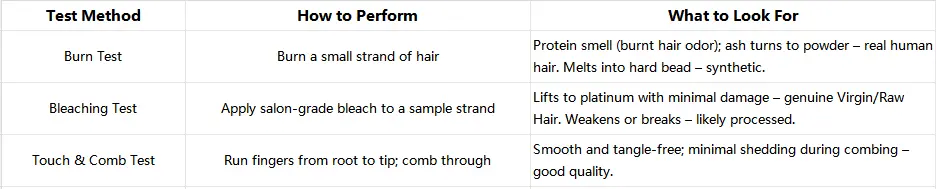
If the sample passes the above tests, you can proceed with greater confidence in the next steps of your collaboration.
Q2: How can we address color and texture variations between batches?
This is the most common source of complaints in B2B procurement—the first and third batches of the same SKU look different, leading to complaints from your downstream customers. Many resellers search for “how to avoid wig supplier scams” and “wig suppliers with consistent color between batches,” indicating that this is a widespread pain point in the industry.
Answer: The key lies in locking down the specifications. When signing a purchase contract, establish two sets of “Golden Control” samples for reference:
One set for color (using Pantone color codes or physical color swatches, rather than vague descriptions like “golden yellow”)
One set for fully assembled wigs (overall appearance)
Require the supplier to do the following:
· Provide a pre-production sample for confirmation before each batch is produced, allowing a tolerance of ±1 shade under standard lighting
· Clearly define AQL (Acceptable Quality Level) standards in the contract—for example, 1.5 for cosmetic defects and 2.5 for functional defects
· Retain samples from each batch for future comparison or dispute resolution
This approach significantly reduces the risk of returns caused by batch-to-batch variations and protects your business reputation.
Benefits of Following This Process for Purchasing Wigs
3.1 Achieve Higher Profit Margins
Due to their scarcity and durability, Raw and Virgin-grade wigs command higher prices in the end-user market. With proper care, Raw Hair wigs can last 12 to 24 months; this durability enhances customer satisfaction and repeat purchase rates. Consistent quality and higher retail prices ensure both your wholesale profits and your retailers’ profits are secured. Once you gain bargaining power over the Human Hair Wigs Wholesale Price List, your profit margins can expand even further.
3.2 Build Brand Credibility and Differentiation
In a market flooded with synthetic and blended-hair wigs, offering authentic, high-quality wigs helps your brand stand out. When buyers recognize and trust your quality standards, they are more likely to purchase in bulk and establish long-term partnerships. For OEM buyers, using Raw Hair as a base material allows you to create exclusive textures, colors, and styles, establishing a competitive barrier for Private Label Wholesale Wigs.
3.3 Reducing Return Rates and Customer Complaint Costs
Having a clear procurement and quality inspection process—particularly the practice of retaining a “Golden Sample”—can significantly reduce the risk of returns caused by variations between batches. Reducing returns directly increases net profit. While many salon owners are looking for wholesale human hair wig suppliers with low MOQs, they are even more concerned with customer satisfaction resulting from consistent quality.
3.4 Building Stable Supply Chain Relationships
A structured procurement process (sample → trial order → small batch → mass production) helps you identify key partners for in-depth collaboration without relying entirely on a single supplier. For suppliers with a consistent track record, you can collaborate on developing exclusive styles or colors to build a long-term competitive advantage.
Detailed Step-by-Step Guide to Wholesale Human Hair Wigs
Step 1: Define Product Specifications and Create a Specification Sheet
Before communicating with any supplier, prepare a detailed specification sheet. This not only helps you clarify your own requirements but also lets suppliers know right away that you are a professional B2B buyer. The specification sheet should include:
· Hair Type: Raw / Virgin / Remy
· Hair Origin: Brazilian / Vietnamese / Indian / Chinese, etc.
· Length & Density: e.g., 20 inches, 180% density
· Cap Type: Lace Front / Full Lace / 360 / Glueless
· Lace Type: HD Lace / Swiss Lace / Transparent Lace
· Color Reference: Use Pantone color codes or physical color swatches, rather than vague descriptions like “golden yellow”
Step 2: Screen and Evaluate Human Hair Wig Suppliers
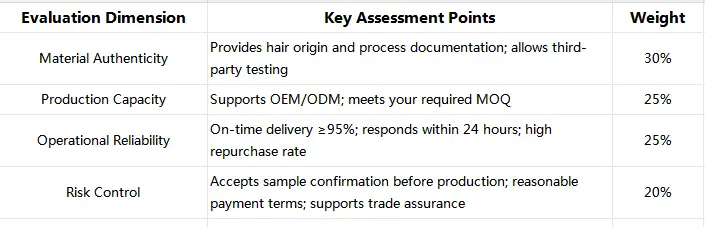
You can gather a list of suppliers from multiple channels—such as Alibaba, industry trade shows, and recommendations from peers. We recommend using the following four criteria for scoring and evaluation (out of 10 points; suppliers with the highest composite scores advance to the next round):
Step 3: Request and Evaluate Samples (Sample Evaluation)
The sample phase offers the lowest-cost opportunity for trial and error. We recommend requesting samples of 2–3 SKUs from each of 2–3 candidate suppliers.
Key Evaluation Points:
· Color Accuracy: Compare against your color swatch under natural light
· Color Retention Test: Rub with a damp white cloth to check for color transfer
· Heat resistance test: Test using a straightening iron at 180–200°C
· Shedding test: Comb from root to tip and record the amount of hair shed (Shedding)
· Washing test: Wash with a mild shampoo and observe how well the style holds up
Select the supplier with the best evaluation results as your “Golden Sample” source, to be used as a benchmark for all subsequent batches.
Step 4: Place a Pilot Order
It is not recommended to place a large order right from the start. Begin with a small-batch pilot order of 50–200 units, covering 2–3 styles or colors you consider to have the most potential. The key to this step is to verify whether the supplier can maintain the quality seen in the sample stage during actual mass production.
During the pilot order phase, focus on:
· The supplier’s communication efficiency and progress updates
· Whether the packaging quality meets requirements
· Whether logistics timeliness and lead times are within the promised range
· Whether the finished products received match the Golden Sample
Many salons and resellers seek wholesale human hair wig suppliers with low MOQs precisely to complete this pilot verification phase at a low cost. Once the pilot order passes inspection, you can confidently move on to the next step.
Step 5: Establish Long-Term Partnerships and Conduct Regular Reviews (Long-term Partnership)
If the trial order passes quality inspection and performs well in sales, you can plan the next, larger-volume order and negotiate more competitive pricing terms with the supplier.
Conduct regular (quarterly or semi-annual) business reviews with key suppliers:
· Summarize defect rate trends (color fading, hair shedding, lace damage, etc.)
· Share market trends and consumer feedback (which textures are gaining popularity, which colors are trending)
· Discuss possibilities for new product development and exclusive partnerships
Through this structured approach, you can not only ensure product quality but also grow alongside your suppliers, creating a supply chain advantage that competitors will find difficult to replicate.
Wholesale Human Hair Wigs Case Studies
Case Study 1: An Amazon Wig Seller in Shenzhen (Transition from B2C to B2B)
This seller originally focused solely on retail operations, with annual sales of approximately $2 million. The challenge was that the quality of each shipment was inconsistent, leading to a high rate of negative reviews and the need to frequently switch suppliers.
After implementing the new process:
· Specification standards for the “Raw Hair” flagship product line were clearly defined
· Samples from three candidate suppliers were compared using the “Golden Sample” system
· Selected a supplier in Xuchang, Henan, for a trial order of 50 units; after successful validation, gradually scaled up to an average of 500 units per month
Result: The negative review rate dropped from 8% to below 2%. Thanks to consistent quality, the seller received proactive inquiries from B2B salon clients, and the B2B channel contributed a 30% increase in annual sales within six months of launch.
Case Study 2: A High-End Salon Chain in Los Angeles, USA
This salon chain operates four locations and has historically relied on local U.S. wholesalers for inventory, which resulted in high costs and a lack of color customization options. The owner had been searching for an OEM human hair wig private label supplier to establish their own brand line.
After implementing the new process:
· A detailed spec sheet was developed (requiring 13×6 HD lace, 180% density, and raw Vietnamese hair)
· Directly contacted a human hair wig manufacturer in Shaoyang
· Proceeded in phases: sample confirmation → small batch of 30 units for trial by core customers → positive customer feedback → signed a quarterly supply agreement
Result: The procurement cost per wig was reduced by approximately 35%. Additionally, because the products could be customized with the salon’s exclusive colors, this created a competitive advantage through differentiation. Both customer repurchase rates and average order value increased.
Case Study 3: A West African Wholesale Distributor (Nigeria)
This distributor operates a wig wholesale business in Lagos, primarily serving local retailers. Previously, the company had lost customers due to purchasing low-quality wigs in pursuit of lower prices.
After implementing the new process:
· Shifted to sourcing mid-range Virgin Hair products
· Adopted a “trial order–feedback–repeat purchase” model, initially testing 3 SKUs with different textures
· Selected an Afro Kinky texture as their flagship bestseller, placing an initial order of 300 units
Result: The lifespan of the new batch of wigs increased from 2 months to 8–10 months, and local retailers actively recommended them to end customers. Although the unit cost rose by 40%, the overall profit margin actually increased by approximately 20% due to higher repeat purchase rates.
About Dejun: Your Wholesale Human Hair Wigs Partner
Now that we’ve completed this comprehensive review of the procurement process, the question is: how to buy human hair wholesale? You need a supplier that can truly implement these standards. Dejun is exactly that kind of company—a human hair wig manufacturer based in China’s wig industry hub, dedicated to providing stable, high-quality wig products to B2B customers worldwide.

High Quality
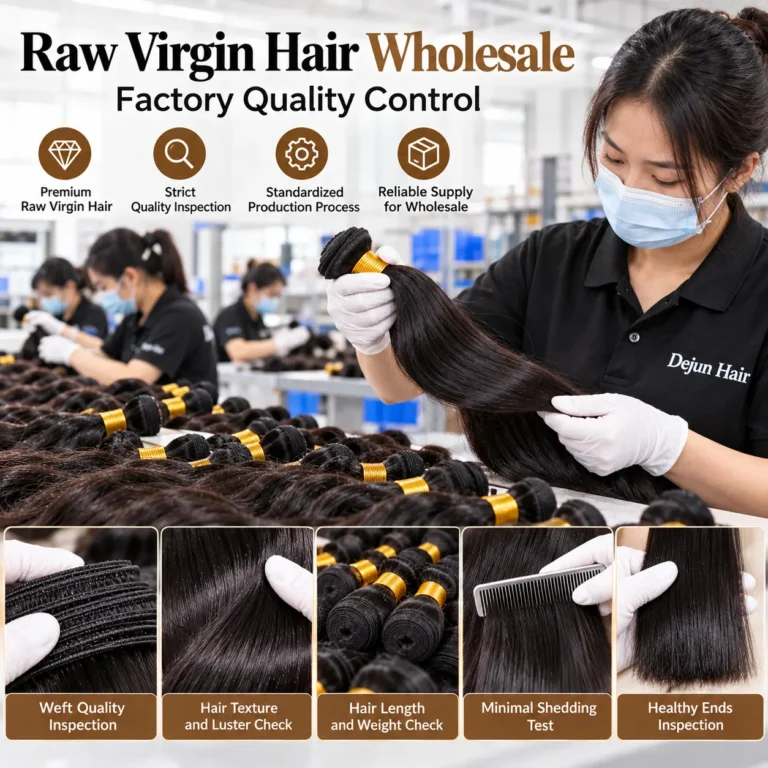
All of our products have undergone production and quality control and come with certificates
Fast Delivery
Our supply chain management is a model of standardization and professionalism in the wig manufacturing industry, ensuring that our customers receive their wigs on time.
Customer Service
Fill out the wig order form to customize your base, size, hair length, and color.